


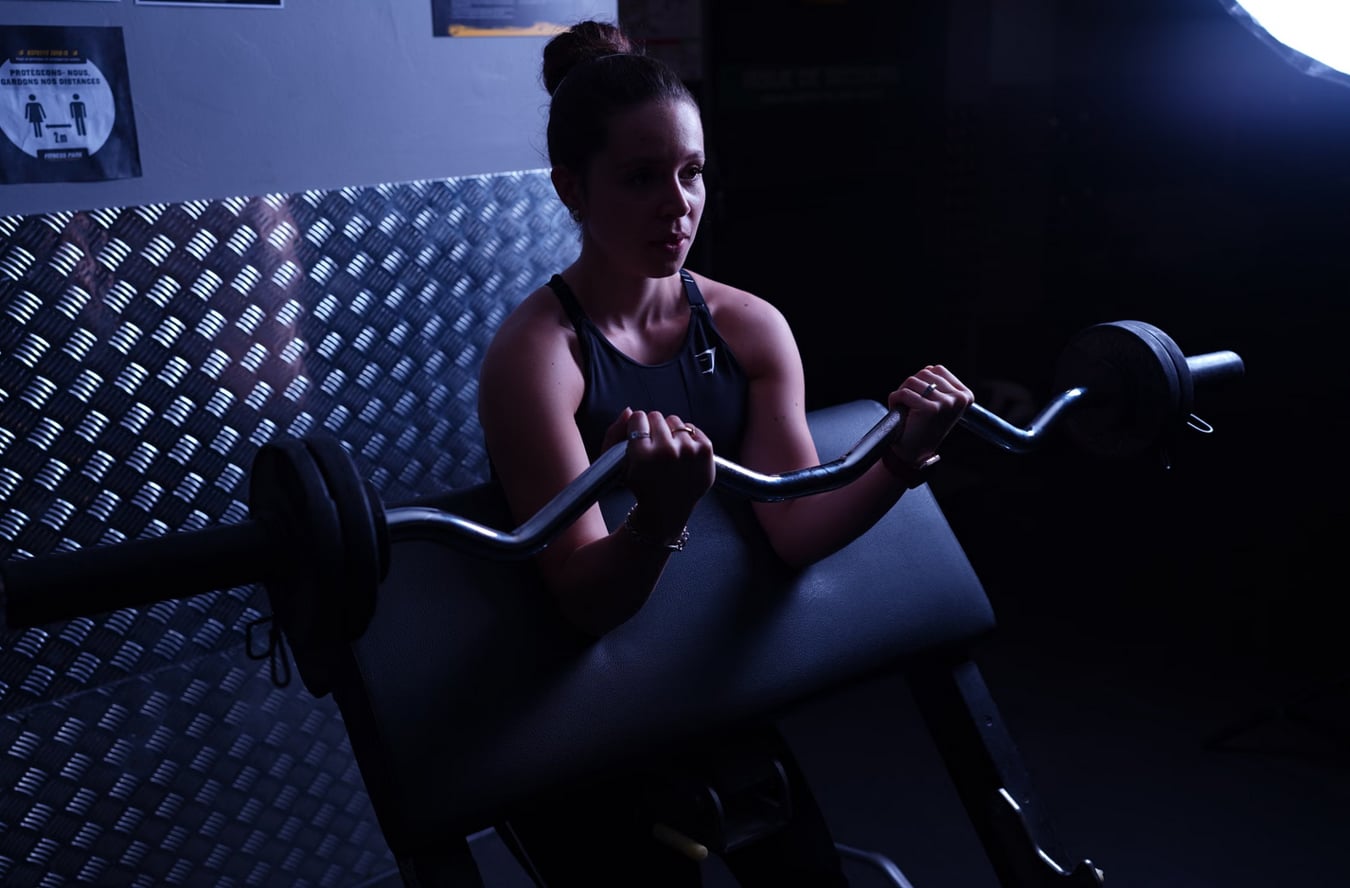
A training gym Echo Park residents choose for structured, goal-focused exercise can do much more than help someone lift heavier weights or finish a tougher workout.
The right approach to training can change how a person stands, walks, sits, bends, and handles everyday physical demands.
When strength training is paired with movement-focused practices, the benefits can extend to posture, flexibility, coordination, and core control.
Consider someone who spends eight hours a day at a laptop.
Their shoulders may gradually round forward, the upper back can become stiff, and the hips may feel tight after long periods of sitting.
Jumping straight into random workouts may burn calories, but it does not necessarily address those movement patterns.
A more thoughtful combination of resistance training, mobility work, and guided movement practice can target the actual problem.
This is where a structured training gym Echo Park program can become part of a broader approach to moving and feeling better.
How Strength Training Supports Better Posture
Good posture is often misunderstood as simply standing up straight or pulling the shoulders back.
In reality, posture depends on a combination of strength, mobility, body awareness, and the ability to maintain comfortable positions without excessive tension.
For example, someone with weak upper-back muscles may struggle to keep the shoulders in a neutral position throughout the day.
Another person may have strong back muscles but limited thoracic mobility, making upright posture uncomfortable.
These situations require different solutions rather than the same generic stretching routine.
A well-designed strength program can address muscular imbalances through exercises such as rows, split squats, loaded carries, presses, and controlled hinge patterns.
The goal is not to force the body into one rigid position.
Instead, training should help the body become strong and adaptable across multiple positions, while movement-based practices such as a gyrotonic class Palo Alto can support mobility, coordination, and greater body awareness.
Core Strength Is About Control, Not Just Abs
Core training is another area where misconceptions are common.
Hundreds of crunches may create fatigue, but fatigue alone does not guarantee better core function.
The core includes muscles around the abdomen, lower back, pelvis, and hips.
These muscles work together to stabilize the spine and transfer force between the upper and lower body.
That matters during obvious gym movements such as squats and presses, but it also matters when carrying groceries, lifting a suitcase into a car, or reaching for something on a high shelf.
Effective core exercises can include dead bugs, Pallof presses, loaded carries, planks, and slow rotational movements.
The exact exercise matters less than the quality of execution and whether the movement matches the person's current ability.
A beginner, for example, may struggle to hold a plank for 20 seconds without the lower back dropping toward the floor.
Extending the plank to a full minute would not necessarily be useful.
A shorter hold with better control can provide a more productive training stimulus and establish a foundation for future progression.
Why Flexibility Alone Does Not Solve Stiffness
When people feel tight, their first instinct is often to stretch harder.
Sometimes that helps.
Sometimes it does very little.
A person who repeatedly stretches tight hamstrings without addressing hip control, pelvic positioning, or surrounding muscle strength may notice that the tight feeling returns quickly.
The issue may not be a simple lack of muscle length.
Mobility combines usable range of motion with control.
That distinction matters.
Being able to pull a leg into a deep stretch is different from being able to control the leg through that same range during movement.
Strength training through comfortable, progressive ranges of motion can improve usable mobility.
Deep split squats, controlled step-ups, full-range pulling movements, and carefully loaded squats can help build strength where the body previously felt weak or unstable.
Take the example of someone who feels stiff whenever they bend down to tie their shoes.
Stretching the hamstrings for five minutes each morning might provide temporary relief.
However, improving hip mobility, trunk control, and strength through a comfortable hinge pattern may have a greater impact on the actual movement they are trying to perform.
How Gyrotonic Movement Complements Strength Training
Gyrotonic-based movement offers a different physical experience from conventional resistance training.
It uses flowing, circular, and spiraling movement patterns designed to encourage coordination, spinal mobility, controlled breathing, and whole-body movement.
This can complement gym-based strength work particularly well.
Traditional resistance training often uses more linear patterns, such as pushing, pulling, squatting, and hinging.
Those movements are valuable, but daily life also involves rotation, reaching, twisting, bending, and shifting weight between different positions.
Someone who feels strong during a deadlift may still feel awkward rotating through the upper back.
Another person might have good passive flexibility but struggle to control movement smoothly.
Combining different training approaches can help address these gaps.
Improving Spinal Mobility Without Forcing Movement
The spine is designed to move, but different sections contribute in different ways.
Many people who sit for long hours become particularly stiff through the thoracic spine, or mid-back region.
When this area does not move well, the neck or lower back may compensate during certain activities.
Controlled rotational and wave-like movements can encourage greater awareness of spinal motion.
The objective is not to chase the biggest possible range.
It is to develop smoother, more controlled movement within an appropriate range.
Imagine someone who plays recreational tennis on weekends.
They may have enough strength to swing the racket hard, but limited rotation through the torso could affect efficiency.
Improving rotational control while maintaining strength through the hips and core may help the entire movement feel more coordinated.
The same principle applies outside sports.
Reaching into the back seat of a car, turning to grab something from a kitchen counter, or moving a box from one side of the body to another all require coordinated rotation.
Training that includes controlled movement in multiple directions can make these ordinary tasks feel easier.
Combining Strength, Mobility, and Movement Quality
The most effective training routines are rarely built around a single method.
Different tools solve different problems.
Resistance training can improve muscular strength, bone loading, joint stability, and physical capacity.
Mobility work can help improve access to useful ranges of motion.
Movement systems focused on coordination can develop body awareness, breathing patterns, and smoother transitions between positions.
A balanced weekly routine might include two or three strength sessions, dedicated mobility work, and one movement-focused class.
The exact schedule should depend on training history, goals, recovery, and available time.
For a busy professional, three focused sessions may be more realistic than an ambitious six-day schedule that gets abandoned after two weeks.
A person could strength train on Monday and Thursday, attend a movement-focused session on Saturday, and use short walks or mobility sessions on the remaining days.
Consistency matters more than creating the most impressive-looking calendar.
What Progress Can Look Like in Everyday Life
Progress is not always measured by a heavier barbell or a deeper stretch.
Often, the first noticeable improvements appear during ordinary activities.
A person may realize that sitting through a long meeting no longer leaves their lower back feeling exhausted.
Someone else may notice that they can reach overhead without arching excessively through the lower back.
A parent might find it easier to pick up a child from the floor, while a frequent traveler may feel more comfortable carrying luggage through an airport.
These changes come from improving physical capacity and movement options.
Stronger legs make stairs easier.
Better trunk control supports lifting and carrying.
Improved shoulder mobility can make overhead reaching more comfortable.
Greater body awareness can help people notice unnecessary tension before it becomes a persistent habit.
There is also a confidence component.
Someone who previously avoided lifting a heavy suitcase may feel more capable after months of progressive strength training.
A person who once felt stiff during floor exercises may gradually become more comfortable moving between standing, kneeling, and seated positions.
The Importance of Progressive Training
Doing the same exercises with the same resistance for months can eventually limit progress.
The body adapts to repeated demands, which is why training needs gradual progression.
Progression does not always mean adding more weight.
It can involve performing additional repetitions, improving technique, increasing range of motion, slowing the tempo, or moving to a more challenging variation.
For example, someone learning a split squat may initially use support for balance and work through a limited range.
Over time, they might increase depth, remove the support, add resistance, and eventually progress to more demanding single-leg exercises.
This gradual approach builds confidence and gives muscles, joints, and connective tissues time to adapt.
It also makes progress easier to track.
Small improvements in control, balance, and movement quality can be just as meaningful as adding another plate to a barbell.
Recovery Plays a Bigger Role Than Most People Expect
Training creates a stimulus, but adaptation happens during recovery.
Sleep, nutrition, hydration, and stress management all influence how well the body responds to exercise.
Someone who trains intensely five days a week while sleeping poorly and eating inconsistently may feel constantly sore without seeing much progress.
In contrast, a person following a manageable three-day program with adequate recovery may steadily become stronger and move better.
Rest days do not have to mean complete inactivity.
Walking, gentle mobility exercises, and easy movement sessions can support recovery without adding excessive fatigue.
The key is matching activity to the body's current needs rather than treating every session like a test of endurance.
Recovery also affects movement quality.
Fatigue can change coordination and technique, particularly during demanding exercises.
Recognizing when to reduce intensity can be part of intelligent training rather than a sign that a workout was unsuccessful.
Building a Routine That Supports Long-Term Movement
The best exercise routine is one that improves physical capacity without making everyday life harder to manage.
Strength, flexibility, posture, and core control are closely connected, and improving one area often supports progress in another.
A structured gym program can develop strength and stability, while Gyrotonic movement can introduce rotational patterns, spinal articulation, breathing, and coordination.
Together, these approaches can create a more complete movement practice than relying exclusively on stretching or lifting weights.
The goal is not perfect posture or extreme flexibility.
It is having enough strength, control, and range of motion to handle daily activities comfortably and confidently.
Whether that means sitting through a workday with less stiffness, moving more efficiently during recreational sports, or simply feeling stronger while carrying groceries, meaningful progress often shows up in the moments outside the gym.
Long-term results usually come from a simple idea: train with purpose, progress gradually, and choose movement practices that address what the body actually needs.
A thoughtful combination of strength work, mobility training, and coordinated movement can create changes that are useful not only during workouts but throughout everyday life.
%20(1).png)


