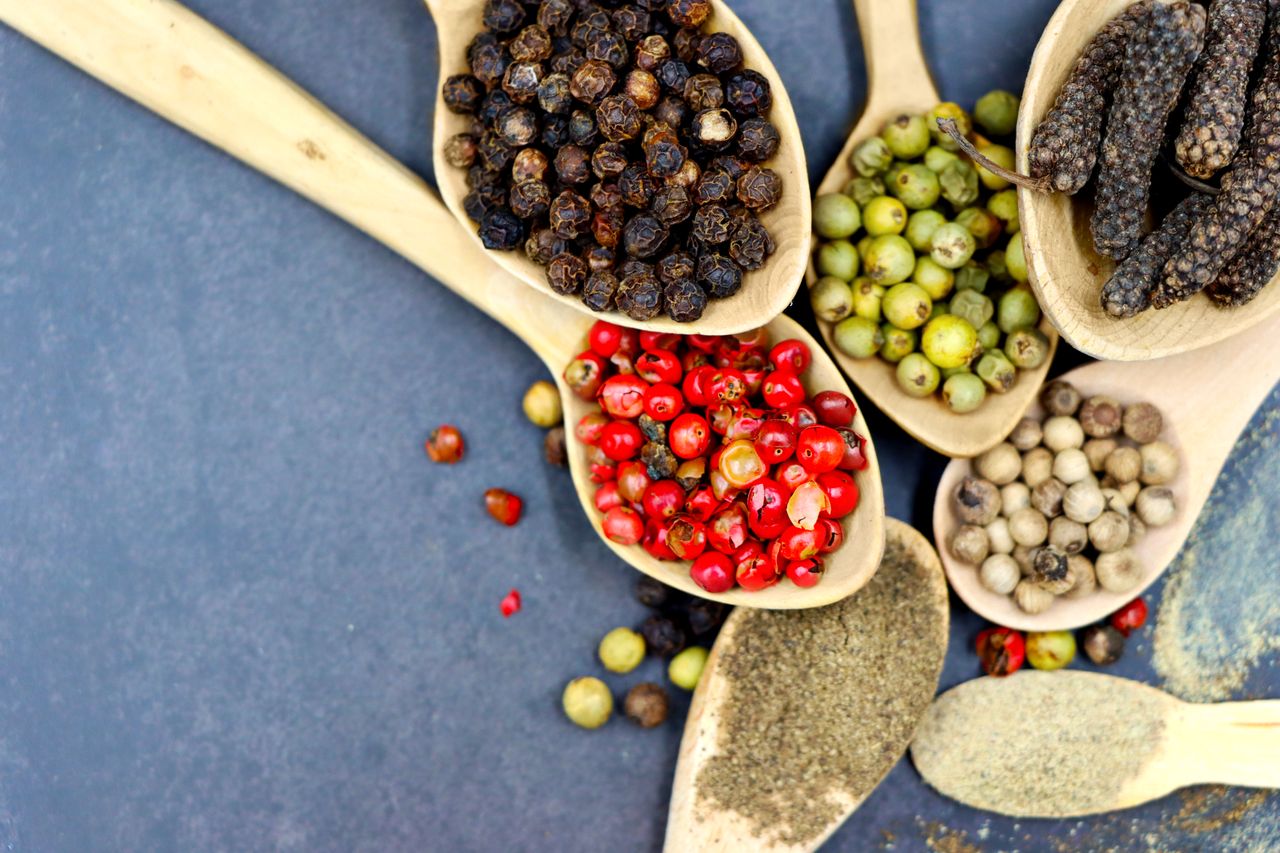
If you’ve read the ingredient lists on Dr. Emil supplements, you’ve probably noticed BioPerine appearing across multiple formulas. It’s not there as filler and it’s not a marketing addition — BioPerine is a patented extract of black pepper (Piper nigrum) standardized to contain at least 95 percent piperine, and its inclusion reflects a specific and well-researched mechanism: it significantly improves the bioavailability of the other ingredients it’s paired with.
In practical terms, BioPerine helps ensure that the nutrients and botanical compounds you’re taking actually reach systemic circulation at meaningful levels, rather than being metabolized or excreted before they can do anything useful.
The Bioavailability Problem in Supplement Science
Bioavailability — the fraction of an ingested substance that reaches the bloodstream and can exert a biological effect — is one of the most underappreciated problems in supplement science. You can take a supplement with a clinically meaningful dose of a compound on the label, and if your body can’t absorb it efficiently, the effective dose you’re actually getting is a fraction of what you paid for.
This is a particularly significant issue for fat-soluble nutrients like curcumin, CoQ10, and fat-soluble vitamins, which require dietary fat and specific transport mechanisms to be absorbed. It’s also a problem for several polyphenols, including resveratrol, quercetin, and many adaptogenic plant compounds that are extensively metabolized in the gut wall and liver before reaching systemic circulation — a process called first-pass metabolism.
Curcumin is the most frequently cited example. It’s one of the most extensively studied plant compounds in existence, with thousands of published papers documenting its effects on inflammation, cellular health, and multiple disease states. But raw curcumin from turmeric has approximately 1 percent bioavailability on its own. Without enhancement strategies, the overwhelming majority of what you swallow passes through your digestive system without being absorbed at meaningful levels. This is why essentially every clinical curcumin trial uses enhanced formulations — and why BioPerine became so widely adopted in the supplement industry.
How BioPerine Works: The Piperine Mechanism
Piperine enhances bioavailability through several overlapping mechanisms, and the research on this is genuinely robust — there are over 80 published peer-reviewed studies on piperine’s bioavailability-enhancing effects across a wide range of compounds.
The primary mechanism is inhibition of intestinal and hepatic enzymes — specifically cytochrome P450 enzymes and P-glycoprotein efflux transporters. These are the metabolic enzymes responsible for breaking down compounds in the gut wall and liver before they reach systemic circulation. By inhibiting them, piperine allows more of the parent compound to pass through intact. This is the mechanism most responsible for the dramatic absorption improvements seen with curcumin: adding 20 milligrams of piperine to a curcumin dose has been shown to increase curcumin bioavailability by 2,000 percent in human subjects.
A second mechanism involves thermogenesis and increased intestinal blood flow. Piperine produces localized warming in the gastrointestinal tract, which increases blood flow to intestinal tissue and may improve passive absorption across the intestinal membrane. This is less compound-specific than the enzyme inhibition pathway and contributes to BioPerine’s broad applicability across different types of supplements.
Third, piperine may influence the tight junctions in intestinal epithelial cells — the cellular connections that determine what passes from the gut lumen into the bloodstream. Some research suggests piperine moderately increases intestinal permeability in a way that facilitates nutrient absorption without compromising gut barrier integrity at the doses used in supplements.
Finally, piperine has been shown to enhance the activity of amino acid transporters in the intestinal mucosa, which improves the absorption of certain amino acid-based compounds and may contribute to enhanced uptake of some peptide-based supplements.
What BioPerine Specifically Improves
The bioavailability enhancement effects of BioPerine are not uniform across all compounds — they’re strongest for specific categories:
Fat-soluble nutrients and antioxidants: Curcumin is the headline example, but the same effect has been documented for CoQ10, beta-carotene, and vitamin A. The enzyme inhibition mechanism is particularly effective for these compounds because they rely heavily on the hepatic metabolism pathway that piperine targets.
Water-soluble B vitamins: Studies have shown piperine enhances the absorption of vitamin B6, B12, and beta-carotene (the precursor to vitamin A). A study published in the Journal of Nutritional Biochemistry found that piperine significantly increased the bioavailability of vitamin B6 in healthy adults.
Polyphenols and plant extracts: Resveratrol, quercetin, EGCG (from green tea), and selenium have all been studied in combination with piperine, with documented improvements in absorption and circulating levels.
Amino acids and protein derivatives: Some research suggests piperine improves the absorption of certain amino acids, which has implications for protein-containing supplements and collagen peptides.
Selenium: A notable study found that the combination of piperine and selenium dramatically increased selenium bioavailability compared to selenium alone — relevant for any supplement targeting antioxidant defense or thyroid support.
The BioPerine Patent and What It Means for Quality
BioPerine is a registered trademark of Sabinsa Corporation, and the trademark designation is important from a quality standpoint. Not all black pepper extracts are equivalent. Generic “black pepper extract” or “piperine” ingredients vary significantly in their purity and standardization. BioPerine is standardized to a minimum of 95 percent piperine — a significantly higher concentration than most generic black pepper extracts — and it’s manufactured under documented quality control processes with extensive third-party testing.
When you see BioPerine specifically named on a supplement label rather than just “black pepper extract,” it indicates the manufacturer chose a verified, standardized ingredient rather than a generic alternative. This matters because the absorption-enhancing effects are dose and purity dependent — a lower-purity extract at the same nominal dose will produce weaker effects.
The standard clinical dose used in research and included in most quality supplements is 5 to 20 milligrams. Higher doses are not more effective and may increase the risk of drug-nutrient interactions (more on this below). Most Dr. Emil formulas include BioPerine at 5 milligrams — the minimum dose shown to produce meaningful bioavailability enhancement — which is intentional and appropriate.
Drug Interactions: What to Know
The same enzyme inhibition mechanism that makes BioPerine useful for improving nutrient absorption can also affect how certain medications are metabolized. Because piperine inhibits cytochrome P450 enzymes — particularly CYP3A4 and CYP2D6 — it can increase the blood levels of drugs that are metabolized by these same enzymes, potentially leading to higher-than-expected drug concentrations.
This is a meaningful consideration for people taking pharmaceutical medications. The most studied interactions involve cyclosporine, certain antiepileptics, and some chemotherapy agents. Anyone taking prescription medications should discuss BioPerine-containing supplements with their healthcare provider or pharmacist before starting, particularly if they’re on medications with a narrow therapeutic window.
For healthy adults taking supplements without prescription medications, BioPerine at the 5 to 20 milligram range used in standard supplement formulations is well-tolerated and considered safe. It has GRAS (Generally Recognized As Safe) status from the FDA. The GI side effects sometimes associated with high doses of black pepper — irritation, reflux — are not typically seen at the supplemental doses used in most products.
Why We Include It in Multiple Formulas
The answer is straightforward: the nutrients and botanical compounds that benefit most from enhanced bioavailability are the same ones that appear across multiple Dr. Emil formulas. Curcumin, fat-soluble vitamins, adaptogenic plant compounds, and polyphenols all have documented absorption challenges that BioPerine directly addresses.
Including BioPerine is essentially a commitment to efficacy over economics. It adds cost to a formula. A manufacturer could save money by leaving it out and still put the same active ingredients on the label at the same doses. But if those ingredients aren’t being absorbed at meaningful levels, the supplement isn’t performing at the level it should. BioPerine is one of the most direct ways to close the gap between what’s on the label and what your body actually receives.
For a deeper look at how individual supplements are formulated and what the clinical evidence behind specific ingredients shows, the NMN dosage guide and the overview of berberine dosage and timing both speak to the evidence-based approach behind specific formulation decisions.

Recommended by Dr. Emil
Daytime Burn
Formulated with BioPerine to ensure the thermogenic and metabolic compounds inside are actually absorbed at meaningful levels — not broken down before they reach circulation. This is BioPerine's purpose in practice: closing the gap between what's on the label and what your body receives. Doctor-formulated, third-party tested.
Shop NowThe Bottom Line
BioPerine isn’t a primary active ingredient — it’s an absorption enabler. Its presence in a formula is a signal that the manufacturer thought carefully about whether the active ingredients would actually reach your bloodstream at meaningful levels, and took steps to ensure they would. The science behind piperine’s bioavailability-enhancing effects is among the most replicated in nutritional biochemistry, and the patent standardization means you’re getting a consistent, quality-controlled ingredient. If you’ve ever wondered why BioPerine appears on so many supplement labels, the answer is: because it works.
Frequently Asked Questions
Is BioPerine the same as black pepper extract?
BioPerine is a specific, patented form of black pepper extract standardized to at least 95 percent piperine. Generic black pepper extracts vary significantly in purity and standardization. BioPerine specifically is the form with the most published clinical research and the most consistent quality documentation.
How much BioPerine is needed to enhance absorption?
Clinical research has demonstrated meaningful bioavailability enhancement at doses as low as 5 milligrams. Most supplements include 5 to 20 milligrams. Higher doses are not more effective and may increase the risk of interactions with medications metabolized by the same liver enzymes piperine inhibits.
Can BioPerine interact with my medication?
Potentially, yes. Because piperine inhibits cytochrome P450 liver enzymes, it can increase blood levels of some prescription medications metabolized by those same pathways. If you take any prescription medications — particularly those with a narrow therapeutic window — discuss BioPerine-containing supplements with your healthcare provider or pharmacist before starting.
Does BioPerine have any side effects?
At the doses used in supplements (5 to 20 milligrams), BioPerine is generally well-tolerated. Digestive discomfort or reflux, which can occur with large amounts of black pepper as food, are not typically reported at supplemental doses. It has GRAS status from the FDA for safety.
Why doesn’t every supplement include BioPerine?
Cost and formulation priorities. BioPerine adds expense to a supplement formula. Some manufacturers omit it to reduce costs or because their formula doesn’t include compounds that significantly benefit from enhanced absorption. Its absence doesn’t automatically make a supplement inferior, but its presence in a supplement with fat-soluble or poorly absorbed actives is a meaningful quality signal.