
The conclusion of this article is clear: there is no single “best” mushroom between turkey tail and cordyceps. Instead, the right choice depends on what you want to support. Turkey tail is primarily recognized for immune health and gut wellness, while cordyceps is better known for energy, endurance, and physical performance support.
Functional mushrooms have gained significant attention as more people look for natural ways to support their health, energy levels, and long-term wellness. Among the many mushroom varieties available, turkey tail and cordyceps have become two of the most popular choices due to their unique compounds and potential benefits.
Although both are classified as functional mushrooms, they serve different purposes. Turkey tail contains beta-glucans and polysaccharides that have been widely studied for their relationship with immune system function. Cordyceps contains compounds associated with cellular energy production and has become especially popular among athletes and active individuals.
This article will explore “turkey tail vs. cordyceps” by examining how each mushroom works, what makes them unique, and which wellness goals each one may best support.
We will compare their benefits, discuss their potential roles in immunity and performance, explore dosage considerations, and explain whether combining these mushrooms may provide additional support.
By understanding the differences between turkey tail and cordyceps, you can make a more informed decision about which mushroom aligns with your lifestyle.
Rather than searching for one universally superior option, the goal is to identify the mushroom—or combination of mushrooms—that best supports your individual health priorities.
In this article, we’ll break down:
- Turkey Tail Vs. Cordyceps: Understanding The Differences Between Two Powerful Functional Mushrooms
- Turkey Tail Mushroom Benefits: How It Supports Immune Health And Overall Wellness
- Cordyceps Mushroom Benefits: Exploring Energy, Endurance, And Athletic Performance Support
- Turkey Tail Vs. Cordyceps For Immunity And Performance: Which Mushroom Is Right For You?
- Turkey Tail And Cordyceps Dosage: Understanding How To Use These Functional Mushrooms Effectively
- Can You Take Turkey Tail And Cordyceps Together? Exploring A Combined Mushroom Approach
- Choosing Between Turkey Tail And Cordyceps: Finding The Best Mushroom For Your Wellness Goals

Frequently Asked Questions About Turkey Tail Vs. Cordyceps
Understanding The Differences Between Two Popular Functional Mushrooms
Functional mushrooms have become increasingly popular among individuals looking for natural ways to support immunity, energy, performance, and overall wellness. Two varieties that often generate interest are turkey tail and cordyceps. While both are considered functional mushrooms, they contain different compounds and are traditionally used for different wellness goals.
Understanding turkey tail vs. cordyceps begins with recognizing that turkey tail is primarily associated with immune system support, while cordyceps is often connected with energy production, endurance, and exercise performance.
Q: What Is The Main Difference Between Turkey Tail And Cordyceps?
A: Turkey tail is best known for its immune-supporting polysaccharides, including beta-glucans, while cordyceps is recognized for compounds that may support energy metabolism, oxygen utilization, and physical performance.
Q: Does Turkey Tail Support Immune Health?
A: Yes. Turkey tail contains beta-glucans and polysaccharide compounds that have been researched for their relationship with immune cell activity and healthy immune responses.
Q: What Are The Main Benefits Of Cordyceps Mushrooms?
A: Cordyceps is commonly used to support energy, endurance, stamina, and exercise performance. Research has explored its potential influence on cellular energy production and oxygen efficiency.
Q: Which Is Better: Turkey Tail Or Cordyceps?
A: Neither mushroom is universally better. The ideal choice depends on your goals. Turkey tail may be preferred for immune-focused support, while cordyceps may be better suited for individuals focused on energy and performance.
Q: Can You Take Turkey Tail And Cordyceps Together?
A: Yes, many people combine functional mushrooms because different varieties contain unique compounds. Turkey tail and cordyceps may complement each other by supporting different areas of wellness.
Q: Are Turkey Tail And Cordyceps Safe For Daily Use?
A: Many adults tolerate these mushrooms well when used according to product directions. However, individuals with health conditions, autoimmune concerns, or those taking medications should speak with a healthcare professional before beginning supplementation.
Q: How Long Does It Take To Notice Benefits From Functional Mushrooms?
A: Functional mushrooms are generally used consistently over time rather than as quick-acting supplements. Individual experiences vary based on lifestyle, nutrition, activity level, and overall health.
When comparing turkey tail vs. cordyceps, the best option depends on whether your primary goal is immune support, physical performance, energy, or a broader wellness approach.
Turkey Tail Mushroom Benefits: Supporting Immune Function And Whole-Body Wellness
Exploring How This Unique Mushroom Helps Maintain The Body’s Natural Defenses
When exploring turkey tail vs. cordyceps, turkey tail stands out because of its long history of research surrounding immune health. Named for its colorful, fan-shaped appearance, turkey tail mushroom (Trametes versicolor) contains naturally occurring compounds that have attracted significant scientific interest.
One of the most studied components of turkey tail is its concentration of beta-glucans and polysaccharides. These compounds interact with immune pathways and may help support balanced immune activity. Rather than simply “boosting” immunity, turkey tail is often described as an immune-modulating mushroom because it supports the body’s natural ability to maintain immune balance.
Turkey tail may support several areas of wellness, including:
- Supporting healthy immune responses
- Promoting gut microbiome health
- Providing antioxidant compounds
- Supporting overall resilience
The relationship between turkey tail and gut health is another reason this mushroom has gained popularity. The gut microbiome plays an important role in immune regulation, and certain compounds in turkey tail may act as prebiotics that support beneficial bacteria.
Research has examined turkey tail’s role in immune markers and its potential as a complementary wellness supplement. While more research continues to develop, its traditional use and modern scientific interest have made it one of the most recognized functional mushrooms available.
For individuals comparing turkey tail vs. cordyceps, turkey tail may be the better fit for those who want a supplement focused primarily on immune health. It may be especially appealing during periods when individuals want to support their body’s natural defenses and overall wellness.
However, supplements work best when paired with healthy habits. A nutrient-rich diet, regular movement, quality sleep, and effective stress management all contribute to maintaining a strong foundation for wellness.

Cordyceps Mushroom Benefits: Supporting Energy, Endurance, And Healthy Performance
Examining How This Adaptogenic Mushroom Supports Strength And Vitality
In the discussion of turkey tail vs. cordyceps, cordyceps offers a unique approach because it is commonly associated with energy production, endurance, and athletic performance. Traditionally used in Eastern wellness practices, cordyceps has become increasingly popular among athletes, active individuals, and those looking for natural energy support.
Cordyceps contains bioactive compounds, including cordycepin and polysaccharides, that have been studied for their potential role in supporting cellular energy pathways. One area of interest is the mushroom’s relationship with adenosine triphosphate (ATP), the molecule responsible for storing and delivering energy within cells.
Potential benefits associated with cordyceps include:
- Supporting exercise endurance
- Promoting healthy energy levels
- Supporting oxygen utilization
- Encouraging physical performance and recovery
Some research suggests cordyceps may help support oxygen efficiency during exercise, which is one reason endurance athletes have shown interest in this mushroom. Better oxygen utilization can play an important role in stamina and physical output.
Cordyceps is also considered an adaptogenic mushroom, meaning it may help the body respond more effectively to physical stressors. This makes it appealing not only for athletes but also for individuals dealing with demanding lifestyles.
When comparing turkey tail vs. cordyceps, cordyceps may be the preferred option for people focused on performance, energy, and exercise support. However, it is important to remember that cordyceps is not a replacement for proper training, nutrition, or recovery.
A consistent fitness routine, adequate protein intake, hydration, and quality sleep remain essential components of performance. Cordyceps may serve as an additional nutritional tool that complements these healthy lifestyle practices.
Turkey Tail Vs. Cordyceps For Immunity And Performance: Which Mushroom Is Right For You?
Comparing Their Unique Compounds, Benefits, And Wellness Applications
The comparison of turkey tail vs. cordyceps highlights two mushrooms with very different areas of focus. While both are functional mushrooms with impressive nutritional profiles, they are generally chosen for different wellness goals.
Turkey tail is primarily recognized for immune support. Its beta-glucans and polysaccharides have been studied for their interaction with immune cells and their ability to support healthy immune regulation.
Cordyceps, on the other hand, is commonly associated with energy and performance. Its unique compounds have been researched for their potential effects on cellular energy production and exercise capacity.
A simple comparison:
Turkey Tail: Immune support, gut health, and overall resilience
Cordyceps: Energy, endurance, oxygen utilization, and performance support
Choosing between these mushrooms depends on what you want to prioritize. Someone looking to support immune wellness may lean toward turkey tail, while an individual focused on workouts, stamina, or daily energy may prefer cordyceps.
It is also possible to use both mushrooms together. Because they support different areas, some people incorporate both into their supplement routines for a more comprehensive wellness approach.
However, functional mushrooms should not be viewed as quick solutions. Their potential benefits are generally associated with consistent use alongside healthy lifestyle practices.
Nutrition, exercise, stress management, and sleep all influence the body’s ability to function optimally. Supplements can provide additional support, but they work best as part of a balanced wellness strategy.
Understanding the differences between turkey tail and cordyceps allows individuals to make more informed choices based on their unique goals

Turkey Tail And Cordyceps Dosage: Understanding How Much You Should Take
Finding The Right Approach For Consistent Functional Mushroom Support
One of the most common questions surrounding turkey tail vs. cordyceps is how much of each mushroom should be taken. While there is no single dosage that works for everyone, understanding supplementation basics can help individuals make informed decisions.
Functional mushrooms are available in several forms, including powders, capsules, teas, and concentrated extracts. Extracts are often preferred because they provide higher concentrations of beneficial compounds.
Dosage considerations may depend on:
- Mushroom species and extract strength
- Individual wellness goals
- Product formulation
- Personal tolerance
Turkey tail supplements are often used by individuals focused on immune support, while cordyceps supplements are commonly selected by people interested in energy and performance.
Consistency is important because functional mushrooms are generally used as long-term wellness supplements rather than immediate solutions. Many people incorporate them into daily routines and evaluate their effects over time.
Quality also plays an important role. Consumers should look for supplements that clearly identify the mushroom species, extraction process, and ingredient amounts. Third-party testing can provide additional confidence in product quality.
Although functional mushrooms are generally well tolerated by many adults, individuals with medical conditions or those taking medications should consult a healthcare professional before beginning supplementation.
The goal is to use functional mushrooms as supportive tools that complement healthy lifestyle habits.
Combining Turkey Tail And Cordyceps: Can These Mushrooms Work Together?
Exploring How Multiple Functional Mushrooms May Complement Each Other
Rather than choosing only between turkey tail vs. cordyceps, many people are interested in whether these mushrooms can be combined. Since each mushroom contains different bioactive compounds, combining them may provide broader wellness support.
Turkey tail is primarily associated with immune health, while cordyceps is commonly used for energy, endurance, and performance. Together, they may support multiple aspects of overall wellness.
A combined approach may appeal to individuals interested in:
- Immune system support
- Physical performance
- Daily energy
- Overall resilience
Functional mushroom blends have become increasingly popular because different mushrooms may offer complementary benefits.
However, more ingredients do not always guarantee better results. Quality, proper dosing, and consistency remain important factors when selecting supplements.
A personalized approach is often best. Someone focused heavily on exercise performance may prioritize cordyceps, while someone more focused on immune wellness may emphasize turkey tail.
For others, combining both mushrooms may provide a balanced strategy that supports multiple wellness goals at the same time.
As with any supplement routine, functional mushrooms should complement—not replace—the foundational habits that support health.

Choosing Between Turkey Tail And Cordyceps: Creating Your Personalized Mushroom Strategy
How To Select The Right Mushroom Based On Your Individual Health Goals
The discussion of turkey tail vs. cordyceps ultimately comes down to choosing the mushroom that best matches your personal wellness goals.
Turkey tail may be ideal for individuals who want immune-focused support and a mushroom associated with gut and immune health. Cordyceps may be better suited for people interested in energy, endurance, exercise performance, and physical vitality.
The best supplement strategy begins with understanding your priorities.
A strong wellness foundation includes
- A balanced, nutrient-rich diet
- Regular physical activity
- Quality sleep
- Stress management
- Targeted supplementation when appropriate
Functional mushrooms represent an exciting area of nutritional research. As interest continues to grow, more people are exploring how different mushroom varieties can fit into personalized wellness routines.
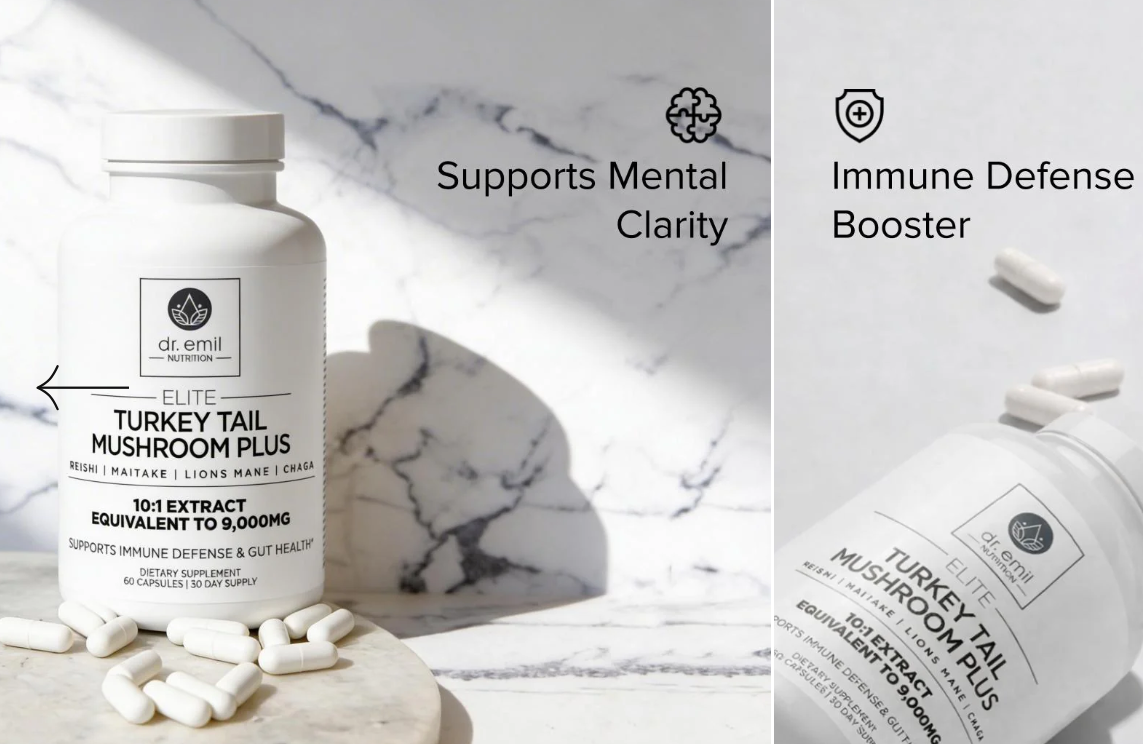
If you are looking for a great source of turkey tail to incorporate into your self care routine then be sure to check out Dr. Emil’s Elite Turkey Tail Mushroom Plus!
By understanding the differences between these two popular mushrooms, individuals can make more informed decisions about supporting immune health, energy, performance, and overall vitality.

Choosing The Right Mushroom For Your Wellness Journey
How Turkey Tail And Cordyceps Can Support Different Paths To Better Health
The comparison of turkey tail vs. cordyceps demonstrates that both mushrooms offer unique advantages, but they support different areas of wellness.
Turkey tail is best known for its immune-focused benefits. Its beta-glucans and polysaccharides have been studied for their role in supporting immune balance and overall resilience. Cordyceps, meanwhile, is often selected by individuals looking to support energy, stamina, exercise performance, and healthy physical output.
Choosing the right mushroom comes down to your personal goals. If supporting immune health is your primary focus, turkey tail may be the better fit. If improving energy levels and supporting an active lifestyle are your priorities, cordyceps may be more appealing.
For some individuals, using both mushrooms together may provide a broader wellness strategy by combining the unique properties of each variety.
However, functional mushrooms work best as part of a complete approach to health. Proper nutrition, regular exercise, quality sleep, and stress management remain the foundation of long-term wellness.
As interest in medicinal mushrooms continues to grow, turkey tail and cordyceps remain two of the most researched and widely used options. Understanding how they differ allows you to make a more personalized choice based on your needs.
Whether you choose turkey tail, cordyceps, or a combination of both, these functional mushrooms may serve as valuable tools for supporting a balanced and proactive approach to health.