Chaga (Inonotus obliquus) is one of those ingredients that sounds like marketing hyperbole until you look at the actual data. It’s routinely described as one of the most antioxidant-rich natural substances ever measured — and that description holds up under scrutiny. Its ORAC (Oxygen Radical Absorbance Capacity) value dwarfs most other foods and botanicals, and the mechanisms behind that antioxidant activity are genuinely distinctive. But chaga’s value in a mushroom blend isn’t purely about antioxidant capacity; its immune-modulating, anti-inflammatory, and adaptogenic properties are what make it earn its place in a comprehensive functional mushroom formula. Here’s what the science actually shows.
What Is Chaga and Why Does It Look Like That?
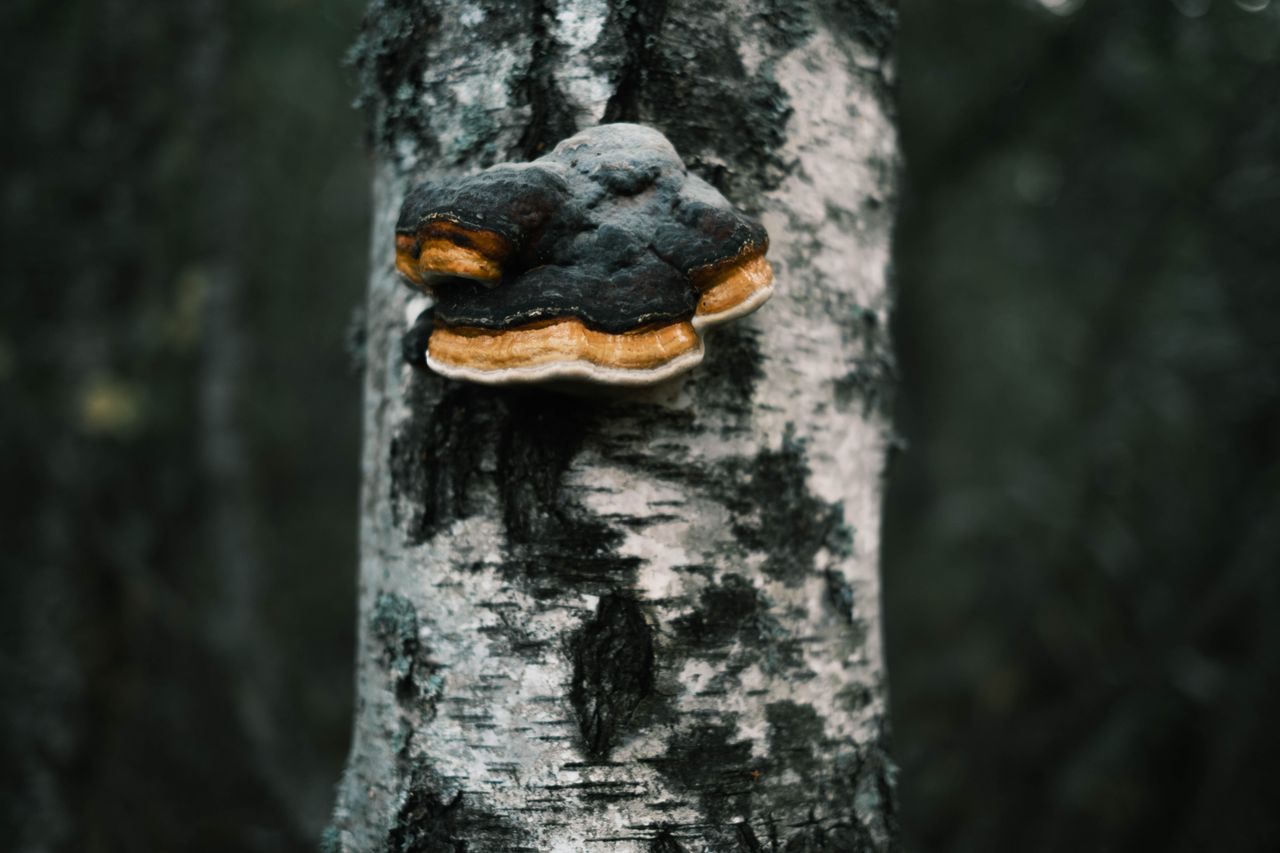
Chaga is technically a parasitic fungus that grows primarily on birch trees in cold northern climates — Siberia, Canada, northern Europe, and parts of the northern United States. It doesn’t look like a conventional mushroom. It presents as a dark, irregular mass on the tree trunk, often described as resembling a chunk of burned charcoal. That distinctive dark exterior is made up of melanin — a pigment compound — and it’s one of the features that contributes to chaga’s extraordinary antioxidant profile.
The portion of chaga used in supplements is the sclerotium: the dense, woody mass that grows on the outside of the tree. This is distinct from the inner, white-orange flesh, and from mushrooms that grow as fruiting bodies above ground. Because of this unusual biology, some of the conventional distinctions made in mushroom supplementation — fruiting body versus mycelium, beta-glucan concentration — apply differently to chaga than to species like lion’s mane or reishi.
Chaga has been used in traditional medicine for centuries, particularly in Russia and Siberia, where it was brewed as a tea for immune support and as a general tonic. Its folk medicine applications predate formal phytochemistry by a long margin, and modern research has progressively identified the compounds responsible for the effects that traditional use pointed toward.
The Antioxidant Profile: What Makes It Exceptional
The headline claim about chaga’s antioxidant capacity is supported by actual measurement. Studies using the ORAC assay have found chaga values in the range of 50,000 to over 140,000 micromoles of Trolox equivalents per gram, depending on preparation and testing method. For reference, raw blueberries — frequently cited as a top antioxidant food — measure around 2,400 to 9,600 per 100 grams. The difference is substantial.
The antioxidant compounds responsible for this profile include multiple distinct categories. Melanin and melanin-like compounds, present in high concentrations in the dark exterior sclerotium, are among the primary contributors. Triterpenoids — specifically betulinic acid, lupeol, and related compounds derived from the birch tree that chaga parasitizes — contribute significantly. Polyphenols including protocatechuic acid, caffeic acid, and ellagic acid add further antioxidant depth. Together these create a layered antioxidant profile rather than the simpler single-compound antioxidant activity found in many other botanicals.
Superoxide dismutase (SOD) activity is another remarkable feature of chaga. SOD is an endogenous enzyme that neutralizes superoxide radicals — one of the most damaging reactive oxygen species in cellular biology — and chaga has been found to contain SOD activity at levels dramatically higher than most other foods or fungi. This is particularly relevant because SOD targets a specific category of oxidative stress that general antioxidant compounds don’t address as efficiently.
Immune Modulation: Beyond Antioxidant Activity
Chaga’s immune effects are mechanistically distinct from its antioxidant activity and represent a separate reason for its inclusion in functional mushroom formulas. Like other medicinal mushrooms, chaga contains beta-glucans — polysaccharides that interact with immune cell receptors (particularly the Dectin-1 receptor on macrophages and dendritic cells) to modulate immune activity.
The distinction with chaga is that its immune activity appears to be particularly pronounced in the direction of immune regulation rather than simple stimulation. Multiple studies have found that chaga polysaccharides reduce pro-inflammatory cytokine production while simultaneously enhancing natural killer cell activity and macrophage function. This is the immune-modulatory rather than immune-stimulating pattern that characterizes the most therapeutically useful medicinal mushrooms.
In practical terms, this means chaga is associated with reducing chronic low-grade inflammation — the persistent, systemic inflammatory state that underlies much of age-related chronic disease — while supporting the immune surveillance functions that protect against pathogens and cellular abnormalities. This is a meaningful distinction from simply “boosting” immunity in a non-specific way.
Research in this area has primarily been conducted in cell culture and animal models. Human clinical trials are limited, which is an honest limitation worth naming. The mechanistic data is strong and the animal research is consistent, but the direct human evidence base is thinner than what exists for some other medicinal mushrooms. This is why chaga is most appropriately positioned as a supportive and complementary ingredient in a comprehensive mushroom blend rather than as a standalone therapeutic.
Anti-Inflammatory Effects
The anti-inflammatory research on chaga is one of the more compelling areas of study. Multiple in vitro and animal studies have found that chaga extracts significantly reduce the production of inflammatory mediators including TNF-alpha, IL-6, and IL-1beta — the same cytokine profile implicated in chronic inflammatory conditions.
A 2010 study in the International Immunopharmacology journal found that chaga polysaccharide extract significantly inhibited LPS-induced nitric oxide production in macrophages — one of the standard cell culture models for anti-inflammatory testing. A subsequent mouse study found similar effects on colitis markers, with chaga extract reducing colon length shortening and inflammatory infiltration.
The mechanism appears to involve inhibition of the NF-κB signaling pathway — one of the master regulators of inflammation at the cellular level. Many anti-inflammatory interventions, both pharmaceutical and natural, work through NF-κB modulation, which suggests chaga is operating through a well-characterized and biologically significant pathway.
Betulinic acid, one of the triterpenoid compounds chaga derives from its birch tree host, has been studied independently for anti-inflammatory and anticancer effects. This compound is not unique to chaga — it’s present in birch bark directly — but chaga concentrates it in a form that’s accessible through supplementation.
Adaptogenic Properties
Chaga is increasingly classified alongside recognized adaptogens — herbs and fungi that help the body maintain homeostasis and resist physical and psychological stressors. While it hasn’t been studied as extensively as ashwagandha or rhodiola in the context of HPA axis regulation and cortisol response, some research suggests chaga’s polysaccharides may support the body’s stress response through effects on immune function and oxidative balance.
This positions chaga as a complementary ingredient in a mushroom blend: not the primary adaptogen, but a meaningful contributor to overall stress resilience through its antioxidant and anti-inflammatory activity, which reduces the cellular burden of oxidative stress that chronic stress produces.
How Chaga Fits into a Mushroom Blend
In a comprehensive functional mushroom formula, different species address different mechanisms. Lion’s mane contributes primarily through neuroplasticity and NGF stimulation. Reishi through immune modulation, stress adaptation, and sleep support. Maitake through metabolic and immune effects. Shiitake through immune activation and cardiovascular support.
Chaga’s contribution is primarily antioxidant depth and anti-inflammatory support — filling a role that the other species address less directly. Its extraordinary SOD activity and layered polyphenol-melanin-triterpenoid antioxidant profile add protection against oxidative stress at a cellular level that complements the more targeted mechanistic effects of the other species in the blend.
For anyone interested in the specific immune-modulating properties of different mushroom species and how they compare, the Shiitake vs. Chaga comparison goes deeper on the immunity angle specifically. And for context on how functional mushrooms support the gut-brain connection, Lion’s Mane for Anxiety and Depression covers the neurological dimension of the mushroom category.
The Bottom Line
Chaga’s reputation as an antioxidant powerhouse is one of the few supplement claims that holds up to direct measurement. Its ORAC values, SOD activity, and layered antioxidant compound profile are genuinely exceptional. Beyond antioxidants, its immune-modulating and anti-inflammatory effects are mechanistically well-characterized, even if the direct human clinical evidence is still developing. In a mushroom blend, chaga earns its place by adding antioxidant depth and anti-inflammatory support that complements the more targeted neurological, immune, and metabolic effects of the other species. It’s not hype — it’s one of the more defensible claims in functional mushroom supplementation.

Recommended by Dr. Emil
Mushroom Complex
Chaga's layered antioxidant and immune-regulatory profile works alongside lion's mane, reishi, and other functional mushrooms in a comprehensive blend — each species addressing different mechanisms that no single mushroom covers alone. Doctor-formulated, hot water extracted for full beta-glucan delivery, third-party tested.
Shop NowFrequently Asked Questions
What is the best way to take chaga?
Chaga is available as a hot water extract powder, capsules, and tinctures. Hot water extraction is important because it releases the beta-glucan polysaccharides that are responsible for immune effects — these are not alcohol-soluble, so alcohol tinctures alone won’t deliver the full spectrum of active compounds. In a multi-mushroom blend, look for products that use hot water or dual-extraction methods.
Is chaga safe to take long-term?
Chaga is generally well-tolerated, but two cautions are worth noting. First, chaga is high in oxalates — people with a history of kidney stones or kidney disease should use it cautiously and consult a healthcare provider. Second, chaga has some blood-thinning properties and may interact with anticoagulant medications. For most healthy adults, long-term use at supplemental doses is considered safe.
How does chaga compare to other antioxidant supplements like vitamin C or vitamin E?
Chaga’s antioxidant profile is broader and more complex than single-compound antioxidants. Vitamin C and vitamin E are important antioxidants that address specific reactive species. Chaga’s combination of melanin, polyphenols, triterpenoids, and SOD activity creates a multi-mechanism antioxidant effect that covers more categories of oxidative stress. They’re complementary rather than competing.
Does chaga affect blood sugar?
Some animal research suggests chaga may support healthy glucose metabolism and improve insulin sensitivity, possibly through its effects on inflammation and oxidative stress. Human clinical data is very limited. People managing blood sugar with medication should discuss chaga supplementation with their healthcare provider.
Why is chaga often found in mushroom blends rather than standalone supplements?
Chaga’s primary contributions — antioxidant protection and anti-inflammatory support — work synergistically with the more targeted neurological, immune, and adaptogenic effects of other functional mushrooms. A comprehensive blend captures benefits across multiple mechanisms that no single species delivers alone.