
The conclusion of this article is clear: neither turkey tail nor reishi is universally better than the other. Instead, the best choice depends on your individual wellness goals. Turkey tail is primarily recognized for immune-focused support, while reishi is valued for stress balance, relaxation, and overall resilience.
Functional mushrooms have gained significant attention in recent years as more people explore natural ways to support immunity, healthy aging, stress management, and overall well-being. Among the most popular varieties, turkey tail and reishi stand out because of their unique compounds and long history of traditional use.
Although both mushrooms are often grouped together, they support the body in different ways. Turkey tail contains naturally occurring beta-glucans and polysaccharides that have been studied for their relationship with immune function and gut health. reishi contains compounds such as triterpenes and polysaccharides that contribute to its reputation as an adaptogenic mushroom associated with stress support and balance.
This article will explore “Turkey tail vs. Reishi” by breaking down the differences between these two popular functional mushrooms.
We will examine how turkey tail supports immune wellness, how reishi may promote relaxation and stress resilience, and how their unique compounds compare. We will also discuss dosage considerations, whether combining these mushrooms makes sense, and how to determine which option best fits your personal wellness routine.
By understanding how turkey tail and reishi work differently, you can make a more informed decision about which mushroom may support your specific health goals.
Rather than searching for a single “best” mushroom, the goal is to find the mushroom—or combination of mushrooms—that aligns with your lifestyle and long-term wellness strategy.
In this article, we’ll break down:
- Turkey Tail Vs. Reishi: Understanding The Differences Between Two Powerful Medicinal Mushrooms
- Turkey Tail Mushroom Benefits: How It Supports Immune Health And Gut Wellness
- reishi Mushroom Benefits: Exploring Stress Support, Relaxation, And Immune Balance
- Turkey Tail Vs. Reishi For Immunity: Comparing Their Unique Health Properties
- Turkey Tail And Reishi Dosage: How To Use These Functional Mushrooms Effectively
- Can You Take Turkey Tail And Reishi Together? Exploring A Combined Mushroom Approach
- Choosing Between Turkey Tail And Reishi: Finding The Best Mushroom For Your Wellness Goals

Frequently Asked Questions About Turkey Tail Vs. Reishi
Understanding The Differences Between Two Popular Functional Mushrooms
Functional mushrooms have become increasingly popular among people looking for natural ways to support immunity, stress balance, and overall wellness. Two of the most recognized varieties are turkey tail and reishi, but many people wonder how they compare. Understanding Turkey tail vs. reishi starts with recognizing that these mushrooms contain different compounds and may support the body in different ways.
Turkey tail (Trametes versicolor) is best known for its immune-supporting polysaccharides, including beta-glucans and compounds studied for their role in immune system balance. reishi (Ganoderma lucidum) is often called the “mushroom of immortality” and is traditionally valued for its adaptogenic properties, stress support, and ability to promote relaxation.
Below are some of the most common questions about these two functional mushrooms.
Q: What Is The Main Difference Between Turkey Tail And Reishi?
A:
- Turkey tail
- Primarily recognized for immune system support and gut health benefits.
- Reishi
- Commonly associated with stress management, relaxation, immune balance, and overall resilience.
- Both mushrooms offer unique bioactive compounds.
Q: Does Turkey Tail Support Immune Health?
A: Yes. Turkey tail contains beta-glucans and polysaccharides that have been researched for their interaction with immune cells. These compounds may help support balanced immune responses and overall immune function.
Q: What Are The Main Benefits Of Reishi Mushrooms?
A: reishi is commonly used for stress support, relaxation, sleep quality, and immune regulation. It contains compounds such as triterpenes and polysaccharides that contribute to its wellness profile.
Q: Which Is Better: Turkey Tail Or Reishi?
A: Neither mushroom is universally better. The ideal choice depends on personal goals. Those focused on immune support may prefer turkey tail, while individuals interested in stress balance and relaxation may prefer reishi.
Q: Can You Take Turkey Tail And Reishi Together?
A: Many people combine functional mushrooms because different varieties contain different beneficial compounds. Turkey tail and reishi may complement each other by supporting different aspects of wellness.
Q: Are Turkey Tail And Reishi Safe For Daily Use?
A: Many adults tolerate these mushrooms well when used according to product directions. However, individuals with medical conditions, autoimmune concerns, or those taking medications should consult a healthcare professional before adding supplements.
Q: How Long Does It Take To Notice Results From Functional Mushrooms?
A: Functional mushrooms are generally used as long-term wellness supplements. Some individuals notice changes within weeks, while others may require consistent use over several months.
Understanding the differences between turkey tail and reishi can help individuals choose the mushroom that best aligns with their wellness goals.
Turkey Tail Mushroom Benefits: Supporting Immune Function And Overall Wellness
Exploring How This Unique Mushroom Helps Maintain The Body’s Natural Defenses
When comparing Turkey tail vs. reishi, turkey tail stands out as one of the most researched medicinal mushrooms for immune support. This colorful mushroom gets its name from its fan-shaped appearance, which resembles the feathers of a turkey’s tail. Beyond its unique appearance, turkey tail contains compounds that have made it a focus of nutritional and scientific research.
One of the most important components of turkey tail is its high concentration of beta-glucans and polysaccharides. These natural compounds interact with immune cells and may help support a balanced immune response. Rather than simply stimulating the immune system, turkey tail is often described as an immune-modulating mushroom because it supports healthy immune activity.
Turkey tail may provide support in several areas, including:
- Supporting immune system balance
- Promoting healthy gut microbiome activity
- Providing antioxidant compounds
- Supporting overall wellness and resilience
Another reason turkey tail has gained attention is its relationship with gut health. The gut microbiome plays a significant role in immune regulation, and turkey tail’s prebiotic properties may help encourage a healthier microbial environment.
Research has explored turkey tail’s impact on immune markers and its potential role as a complementary wellness supplement. While more research continues to develop, its long history of traditional use combined with modern scientific interest has made it one of the most popular functional mushrooms available today.
For individuals comparing Turkey tail vs. reishi, turkey tail may be the preferred choice for those who want targeted immune support. It is especially appealing to people who want to strengthen their wellness routine with a mushroom known for its immune-focused compounds.
However, supplementation works best alongside healthy lifestyle habits such as regular exercise, proper nutrition, stress management, and quality sleep.

Reishi Mushroom Benefits: Promoting Stress Balance And Whole-Body Support
Examining How The “Mushroom Of Immortality” Supports Relaxation And Wellness
In the conversation around Turkey tail vs. reishi, reishi offers a different approach to wellness. Known traditionally as the “mushroom of immortality,” reishi has been used for centuries in Eastern wellness practices and is now widely studied for its potential adaptogenic properties.
Unlike turkey tail, which is often highlighted for immune-focused support, reishi is commonly associated with helping the body adapt to stress. Adaptogens are natural compounds that may support the body’s ability to maintain balance during periods of physical or mental stress.
Reishi contains several bioactive compounds, including triterpenes and polysaccharides. These compounds have been studied for their relationship with immune regulation, relaxation, and overall wellness.
Potential benefits associated with reishi include:
- Supporting a healthy stress response
- Promoting relaxation and calmness
- Supporting immune balance
- Encouraging healthy sleep patterns
Modern lifestyles often involve constant stressors, which can affect energy levels, mood, and recovery. This has increased interest in natural compounds that may support the body’s ability to maintain balance.
Reishi is often chosen by individuals who are looking for a mushroom that complements evening routines, relaxation practices, or stress management strategies. Many wellness enthusiasts incorporate reishi into their daily routines through capsules, powders, or mushroom blends.
While reishi is not a replacement for medical treatment or stress management techniques, it may serve as a supportive addition to a healthy lifestyle.
When comparing Turkey tail vs. reishi, reishi may be the better fit for individuals focused on stress resilience, relaxation, and whole-body balance rather than primarily immune-focused support.
Turkey Tail Vs. Reishi For Immune Health: Which Mushroom Is Right For You?
Comparing Their Unique Compounds, Benefits, And Potential Wellness Applications
The comparison of Turkey tail vs. reishi often focuses on immune health because both mushrooms contain compounds that interact with the body’s natural defense systems. However, their approaches are different.
Turkey tail is one of the most recognized mushrooms for immune support because of its beta-glucans and polysaccharides. These compounds have been studied for their ability to communicate with immune cells and support balanced immune function.
Reishi also supports immune health, but it is often viewed through the lens of regulation and balance. Its triterpenes and polysaccharides contribute to its adaptogenic properties, which may help support overall resilience.
A simple comparison:
- Turkey Tail: Best known for immune-focused support and gut-immune health
- Reishi: Best known for stress balance, relaxation, and immune regulation
Choosing between the two depends on what someone wants to prioritize. A person looking for targeted immune support may gravitate toward turkey tail. Someone dealing with high stress levels or looking for relaxation support may prefer reishi.
It is also important to remember that immune health is influenced by many factors. Nutrition, sleep, exercise, hydration, and stress management all play important roles.
Functional mushrooms should be viewed as supportive tools rather than quick solutions. Their benefits are typically associated with consistent use as part of a broader wellness strategy.
For many people, the answer may not be choosing one mushroom over the other. Because turkey tail and reishi contain different compounds, some individuals use both as part of a comprehensive mushroom supplement routine.

Turkey Tail And Reishi Dosage: Understanding How Much You Should Take
Finding The Right Approach For Consistent Functional Mushroom Support
When exploring Turkey tail vs. reishi, dosage is one of the most common questions people have. While there is no single recommended amount that works for everyone, understanding general supplementation practices can help individuals make informed decisions.
Functional mushrooms are available in multiple forms, including powders, capsules, teas, and concentrated extracts. Extracts are often preferred because they provide higher concentrations of beneficial compounds compared with raw mushroom material.
Dosage may depend on:
- The concentration of the mushroom extract
- The extraction method used
- Individual wellness goals
- Personal tolerance
Many products provide suggested serving sizes based on their specific formulation. Following manufacturer recommendations is typically the best approach.
Consistency is also important. Functional mushrooms are not generally used like quick-acting supplements. Instead, they are incorporated into long-term wellness routines.
Turkey tail supplementation is often chosen by individuals focused on immune support, while reishi may be selected for stress management and relaxation benefits.
Quality also matters. Consumers should look for supplements that clearly identify mushroom species, extraction methods, and ingredient amounts. Third-party testing can provide additional confidence in product quality.
If you are looking for a great source of turkey tail to incorporate into your self care routine then be sure to check out Dr. Emil’s Elite Turkey Tail Mushroom Plus!
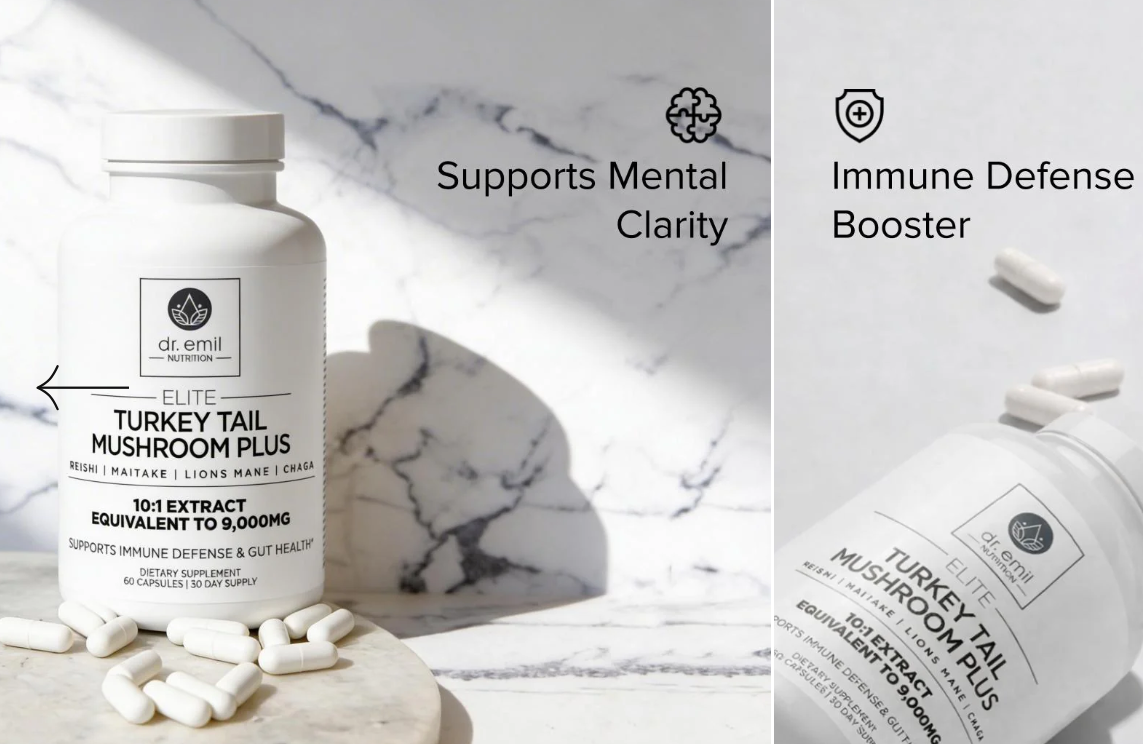
Although functional mushrooms are generally well tolerated, anyone who is pregnant, managing a health condition, or taking medication should speak with a healthcare provider before beginning supplementation.
The goal of supplementation is to provide additional support while maintaining the lifestyle habits that have the greatest impact on health.
Combining Turkey Tail And Reishi: Can These Mushrooms Work Together?
Exploring How Multiple Medicinal Mushrooms May Complement Each Other
Rather than choosing between Turkey tail vs. reishi, many people are interested in whether combining both mushrooms can provide broader wellness support.
Because turkey tail and reishi contain different compounds, they may complement one another. Turkey tail provides immune-focused polysaccharides, while reishi contributes adaptogenic compounds associated with stress balance and relaxation.
A combined mushroom approach may support:
- Immune system resilience
- Stress management
- Overall wellness balance
- Antioxidant support
This is one reason mushroom blends have become increasingly popular. Different mushroom species often contain unique nutritional profiles, allowing individuals to target multiple areas of wellness.
However, more ingredients do not always mean better results. The quality of the mushrooms, extraction process, and consistency of use remain important considerations.
A thoughtful approach involves selecting supplements based on personal goals rather than simply adding numerous ingredients. Someone primarily focused on immune support may emphasize turkey tail, while someone seeking stress support may prioritize reishi.
Combining mushrooms may be appropriate for individuals who want a more comprehensive wellness strategy. As always, supplements work best when paired with healthy lifestyle habits, including balanced nutrition, movement, and proper recovery.

Choosing Between Turkey Tail And Reishi: Creating Your Personalized Mushroom Strategy
How To Select The Right Mushroom Based On Your Health Priorities
The discussion of Turkey tail vs. reishi ultimately comes down to personalization. Both mushrooms offer unique benefits, but the best choice depends on what you want to support.
Turkey tail may be ideal for individuals interested in immune system health, gut wellness, and maintaining overall resilience. Reishi may be better suited for those focused on stress balance, relaxation, and supporting a healthy response to daily challenges.
The foundation of any effective wellness strategy should include:
- A nutrient-dense diet
- Regular physical activity
- Consistent sleep habits
- Stress management practices
- Appropriate supplementation
Functional mushrooms are not intended to replace healthy behaviors. Instead, they can complement the habits that already support long-term wellness.
As research continues to explore medicinal mushrooms, turkey tail and reishi remain two of the most popular and widely used options. Their unique compounds provide different pathways for supporting health, making them valuable additions to personalized wellness routines.
Ultimately, choosing between turkey tail and reishi is about understanding your individual needs. Whether you choose one mushroom or combine both, informed supplementation can help create a more targeted approach to supporting your overall health and vitality.

Choosing The Right Functional Mushroom For Your Lifestyle
How Turkey Tail And Reishi Can Complement A Balanced Approach To Wellness
The comparison of Turkey tail vs. reishi shows that both mushrooms offer unique advantages, but they support different areas of health and wellness.
Turkey tail is widely recognized for its immune-supporting properties, thanks to compounds like beta-glucans and polysaccharides that have been studied for their interaction with immune pathways. Reishi, on the other hand, is often selected for its adaptogenic qualities and its potential ability to support relaxation, stress balance, and overall resilience.
Choosing between them depends on your personal goals. If immune support is your primary focus, turkey tail may be the better fit. If managing everyday stress and supporting a sense of balance are higher priorities, reishi may be more appealing.
For some individuals, combining both mushrooms may provide a broader approach by incorporating the unique compounds found in each variety.
However, functional mushrooms should be viewed as supportive tools rather than replacements for healthy lifestyle practices. The strongest foundation for wellness still comes from consistent habits such as proper nutrition, regular movement, quality sleep, and effective stress management.
As interest in medicinal mushrooms continues to grow, turkey tail and reishi remain two of the most researched and commonly used options. Understanding their differences allows you to create a more personalized supplement strategy that fits your individual needs.
Whether you choose turkey tail, reishi, or a combination of both, the goal is the same: supporting a balanced, healthy lifestyle with thoughtful and informed wellness choices.