



Collagen is a name that’s been popping up more and more in recent years for those looking into products to help their aging skin. You might have noticed in the self-care and beauty sections at your local retailers that a lot of those shelves contain products like serums and powders that have the word “collagen” in big beautiful letters on the front. Making sure prospective buyers know they are getting something that has collagen in it can make or break the decision to buy as it plays a hugely important role in our bodies.
So what is it?
It is a protein, the biggest protein in our body, (30% to be in-fact), and it affects your skin, muscles, bones, ligaments, tendons, cartilage, and more. Taking something like a collagen supplement can help your skin strengthen, and positive improvements regarding alleviating joint pain. But what does it exactly do? Does collagen help with more serious conditions like arthritis? And what’s the best method of increasing your body’s collagen? All of your questions answered and more as we take a look at the MVP of all proteins.
- Breaking Down Collagen and How it Helps Us
- What is Arthritis and Does Collagen Help with it?
- What’s the Recommended Way to Take Collagen and Where to Buy it
Dr. Emil knows that everyone’s body is different, what works for some, may not work for others. It’s all about finding the right balance for you. So keep that in mind as you read on about collagen supplements and how it can potentially help with your arthritis.
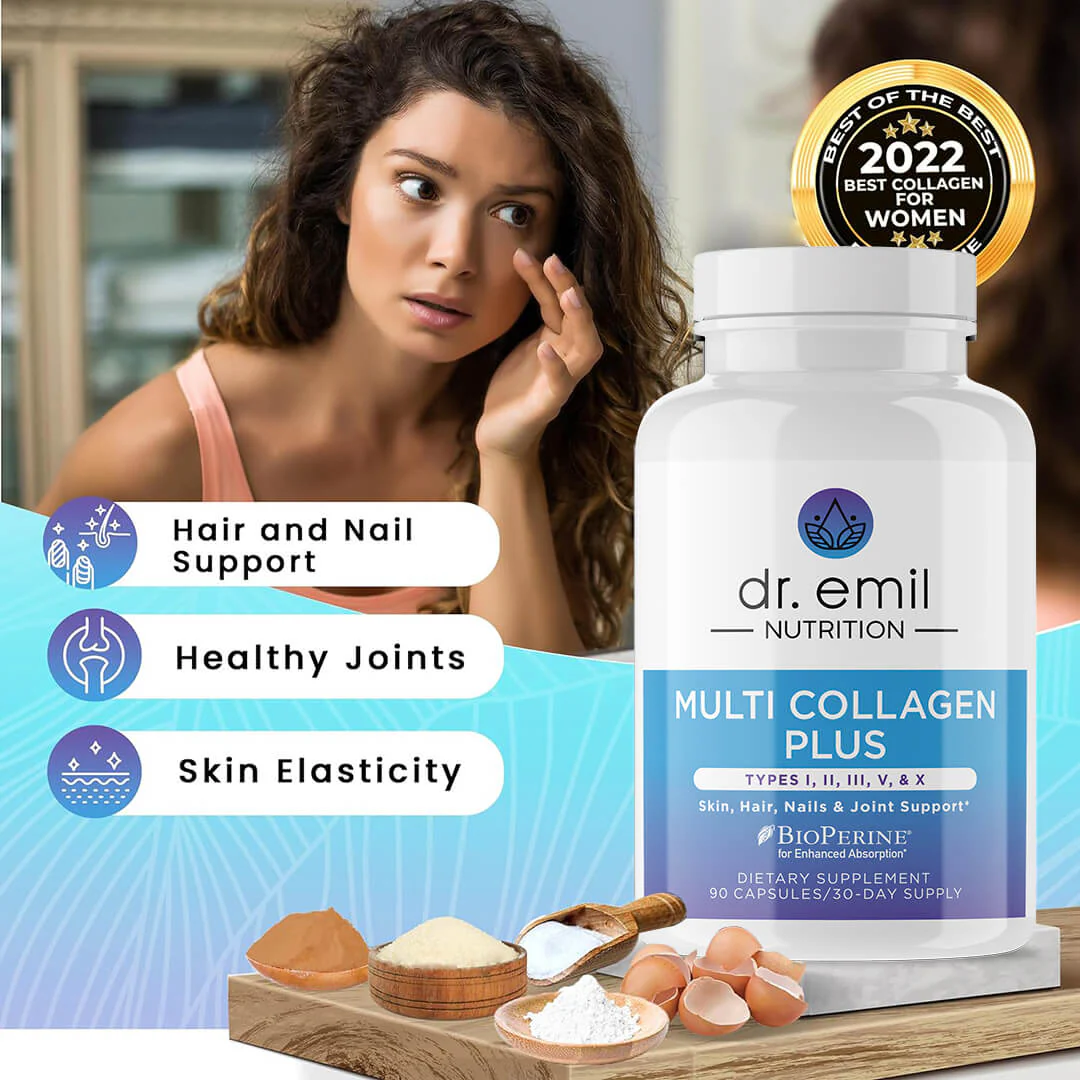
Breaking Down Collagen and How it Helps Us
We touched on it briefly in the intro but let’s take a look at what collagen is and how it helps us in our day-to-day lives.
Collagen is a protein, and protein is made up of amino acids, the main amino acids that are the building blocks of collagen specifically are proline, glycine and hydroxyproline. They all work together to form strong, flexible fibers (connective tissue) which makes it so certain bodily processes are strong and supported. It helps by:
- Being a part of the process to replace dead skin cells
- Creating fibroblasts which form in your middle skin layer (known as the dermis) so it helps new skin cells grow
- Making your bones strong
- Letting your skin and tendons stretch the way they need to
- Providing a protective covering for your organs
As you can see, collagen is our own little superhero.
One other important thing to note is that there are different types of collagen. So far scientists have been able to identify 28 types, but types I, II, and III make up the majority of our body and its respective functions.
Type I:
This is our gold medal winner, making up 90% of our body’s collagen. This type supports our skin’s elasticity and strength, as well as being the base building block of our bones, tendons, fibrous cartilage, and more connective tissues.
Type II:
This type is mainly found in cartilage (the bendable material in the nose, ears, and joints), without this protein here we wouldn't be as supported or as flexible in these areas.
Type III:
Type III is best buddies with type I as it works alongside them in our skin, internal organs, muscles, and arteries.
Three other types, IV, V, and X are also important players in the body each targeting different things but are less abundant that’s why sometimes you’ll see supplements only targeting I, II, and III, while others, (more on that below), will target IV, V, and X as well.
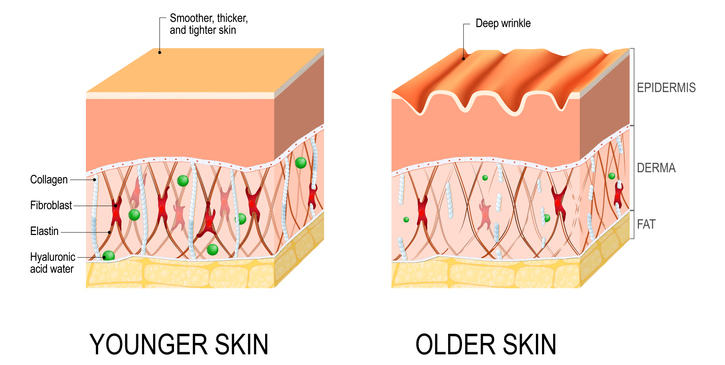
Growing older we begin to get slower, our skin develops wrinkles, and our joints ache and a big part of the reason why this all happens is because of collagen, or the lack thereof. As we age we produce less collagen and our existing collagen breaks down faster than it used to meaning we see less of an impact of all of the things collagen does for our bodies. Cleveland Clinic reports that “Women experience a significant reduction in collagen production after menopause. It’s normal for everyone to experience a decline in collagen production after age 60.”
Besides age there are also lifestyle factors that can lead you further into a “collagen-decline” as we like to call it and that can be attributed to too much sun exposure (especially without sunscreen), smoking, and a heavy diet that consists of too much sugar.
You’ll start to notice your body not producing as much collagen as it once was when:
- Your skin starts noticeably aging. Wrinkles, lines, and sagging skin that wasn’t there before.
- Your joints are stiff and hurt more. Because type II collagen is a key player in our body’s cartilage, you might notice when collagen is no longer as prominent when joints that didn’t ache before now do.
- Your muscles are shrinking and weakening.
It’s not something we outright stop, as fighting against aging bodily processes is like trying to put water into a bucket with a hole in it. But it’s something we can manage, slow down, and offer a smoother transition to the aches, pains, and wrinkles of aging.
What is Arthritis and Does Collagen Help With it?
Arthritis is a very common disease that mainly affects people over the age of 50- (though it can happen to those who are younger). It causes damage to your joints which can happen due to a number of factors. Some have it simply because of age, while others develop it after an injury, or specific health condition. Arthritis is most common in hands, wrists, knees, feet and ankles, hips, and lower back. The main symptoms of arthritis are pain, stiffness, swelling, and a decrease in mobility.
Just like many other diseases, there are different types of arthritis. There’s actually over a hundred different types, but the two most common are osteoarthritis and rheumatoid arthritis.
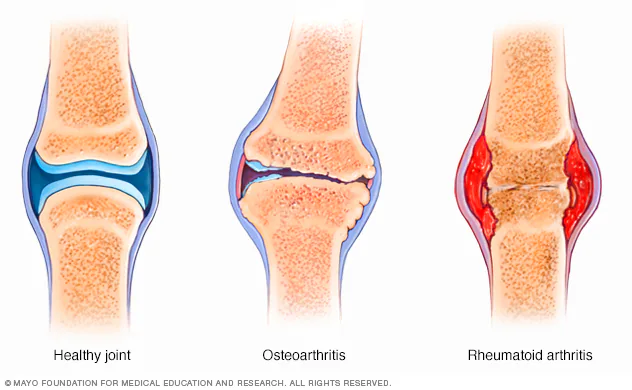
Osteoarthritis is caused by the “wear and tear” of a joint’s cartilage. People without damage have an ease of motion when they move their joints because of that firm, flexible connective tissue, but when it’s worn down, instead of moving with that tissue, you’re instead having bone grind on bone.
Rheumatoid arthritis is when your body’s immune system mistakenly fights back against you. It directly attacks “the lining of the joint capsule, a tough membrane that encloses all the joint parts,” which eventually will lead to its damage and destruction.
So now lies the question, does collagen help with arthritis?
The short answer: Yes, there have been some positive case studies that show collagen is effective in alleviating arthritis symptoms.
The longer answer you’re looking for: Although there hasn’t been a ton of conclusive research done to truly answer without a doubt the question, “does collagen help with arthritis?” There have been numerous case studies that have seen positive results regarding “impact to control inflammation” and “pain relief and joint function improvement” in Osteoarthritis when taking native type II collagen (although more research is required regarding these specific studies). Most findings however have stated positive benefits when it comes to this specific OA treatment option.
As for rheumatoid arthritis there has yet to be enough tests and studies done to conclude whether a collagen supplement may help, but scientists have noted that since collagen is an "anti-inflammatory" it could potentially help in those areas.
It is important for anyone who’s considering taking any kind of supplement or vitamin, not just collagen, to talk to your doctor or a trusted healthcare professional. Even more so if you are already taking a medication that could directly influence said supplement. By consulting a professional they can take in account current or future blood tests and give you the best advice on dosages tailored to your specific needs.
What’s the Recommended Way to Take Collagen and Where to Buy it
Now that you have the information, you may be wondering about next steps into including collagen into your routine to hopefully better help your arthritis symptoms or similar joint pain.
Although collagen can be found in foods like fish, bone broth, chicken skin, and beef (it is a protein that’s only found naturally in animal and seafood). Simply eating copious amounts of said foods won’t actually make a huge difference to your collagen levels. It is broken down through your stomach and turns into amino acids so don’t go out and buy loads of bone broth. That is the same with beauty products like serums, it can’t be effectively absorbed directly through the skin. If you want to directly influence your collagen levels you will need to look at supplements.
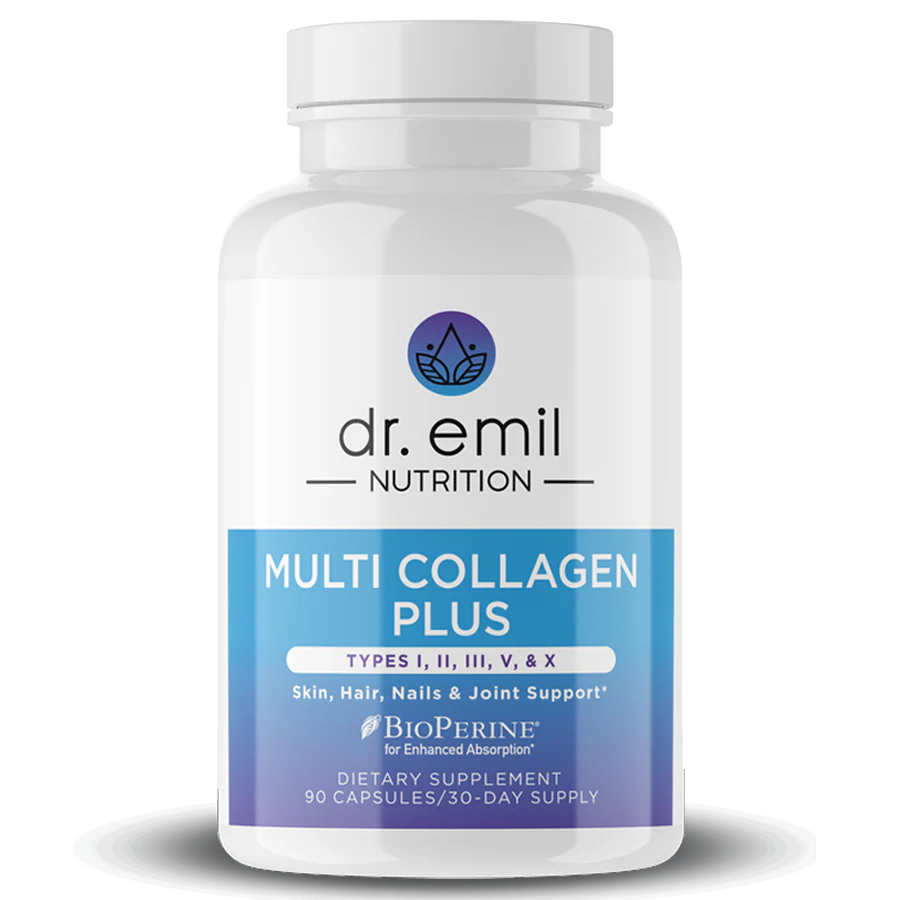
Dr. Emil Nutrition has Multi Collagen Plus which contains 90 capsules for a 30 day supply. It is Amazon’s number 1 selling collagen supplement and for good reason as it is an effective blend of 100% grass-fed beef, chicken, eggshell, and marine collagen sources, including collagen I, II, III, V & X. Dr. Emil’s high-dose collagen formula is enhanced with BioPerine, a black pepper extract that vastly improves the absorption and metabolization of vitamins and supplements.
Dr. Emil Nutrition has been featured in acclaimed news and health publications organizations like CNN, The Guardian, and Men’s Health, and has had countless testimonials backing the quality of his products. Using his both medicine and Sports + Exercise Science degrees, his knowledge has led him to create a space that makes holistic health and happiness accessible for not just select persons, but everyone. Wanting to help those afflicted by arthritis through supplements like the Multi Collagen Plus is just one of the many products created to help improve people’s lives.
Dr. Emil Nutrition also has a number of other alternatives to the regular Multi Collagen Plus capsule supplement including his Multi Collagen Peptides Plus Hyaluronic Acid in a variety of flavors including Hot Cocoa with Marshmallows, Pumpkin, Matcha, and Peppermint Black Tea amongst others. Also in the store Multi Collagen Plus Sleep Support, Biotin & Vitamin D, Gut Health, and more. You’ll find a wide range of products that will help you best with getting collagen in the most effective manner.
Conclusion: Does Collagen Help with Arthritis?
Although there is no current concrete definitive answer to this question, it seems from the several case studies and trials that all roads are pointing to collagen being a helpful supplement for arthritis. It can help you manage your pain, stiffness, and inflammation which are some of the biggest effects of the disease. Along with that collagen can help other areas of the body including your skin’s health. All around, a collagen supplement is well-worth the try if you are looking at ways to help manage your arthritic symptoms.


