
Hair loss is frustrating, confusing, and honestly, sometimes a little heartbreaking. From thinning strands to stubborn bald spots, it feels like your hair has a mind of its own.
So if you’re noticing more strands of hair falling out in the shower or feeling the breeze a little too much against your scalp, don’t worry. First of all, you are not alone. Hair loss affects more than 50 million men and 30 million women just in the United States.
But hair loss being a common issue doesn’t make it any easier to deal with when it’s affecting you personally.
If you’re looking for solutions that help your hair stay healthy and strong, collagen is one of the first options that comes up. But can it actually do anything for your hair if it’s already falling out, or is it just a way to give already healthy strands a boost? Is there anything to collagen for hair health, or is it just another influencer-fueled wellness trend?
That’s what we’re here to dig into.
Collagen has been studied for decades, so there’s plenty of information about how it does and doesn’t work. We’re breaking down the research so that you don’t need a medical degree to understand how this building block functions in terms of skin, joint, and hair health, plus how to make it work for you.
In this article, we’ll break it down so you can see the whole picture, including:
- What collagen is and why it matters for hair health
- The main causes of hair loss and thinning
- What the research actually says about collagen and hair growth
- How to get the most out of collagen, including supplements, nutrients, and lifestyle tips
By the end, you’ll know whether collagen could be a real game-changer for your hair—or if you should focus your efforts elsewhere.

Collagen is a protein that contributes to long, strong, healthy hair – not to mention nail, skin, and joint health, too.
What is Collagen + Why Does it Matter for Hair?
Collagen is one of the most abundant proteins in the human body, acting as a structural support system for your skin, joints, and connective tissues. Think of it as the scaffolding that keeps everything held together and looking healthy.
But beyond skin elasticity and joint health, collagen also plays an important role in hair.
Hair is primarily made of keratin, another protein, but collagen provides the amino acids needed to produce and strengthen keratin. Without enough collagen, hair can become weaker, more brittle, and prone to breakage.
As we age, natural collagen production declines, starting as early as our mid-20s. That drop can affect not just wrinkles or sagging skin but also the overall strength and density of hair. This is where collagen supplementation or collagen-rich foods can step in. By providing your body with the building blocks it needs, you may help maintain thicker, shinier, and more resilient hair.
Collagen comes in several forms, with hydrolyzed collagen (or collagen peptides) being the most common in supplements. These peptides are broken down into smaller amino acids, making them easier for your body to absorb and utilize.
Incorporating collagen into your routine — whether through supplements, protein-rich foods, or a combination — can support healthy hair growth while also benefiting skin, nails, and joints.

The Main Causes of Hair Loss and Thinning
Hair loss is rarely about just one thing—it’s usually a mix of genetics, lifestyle, and overall health. Understanding what’s behind the shedding is the first step toward addressing it effectively.
Genetics and Hormones
For many men and women, hair loss is inherited. Male and female pattern baldness are tied to hormones like dihydrotestosterone (DHT), which can shrink hair follicles over time. Genetics can dictate not just whether you experience hair loss but also the timing and pattern.
Age and Natural Decline
As we get older, hair naturally thins. Follicles produce smaller, weaker hairs, and the growth cycle slows down. Collagen production declines, which can indirectly affect hair strength and elasticity. These changes are natural, but they can lead to unwanted changes to your hair’s appearance, like your hairline receding or your once-luxurious locks getting thinner and less lustrous.
Nutritional Deficiencies
Hair is incredibly nutrient-dependent. Lacking key vitamins and minerals—like iron, zinc, biotin, and amino acids—can cause hair to break, thin, or fall out. Collagen plays a role here too, since it provides amino acids essential for producing keratin, the main protein in hair.
Stress and Lifestyle Factors
High stress, poor sleep, and certain medications can also contribute to thinning. Physical stressors like illness, surgery, or extreme weight changes may trigger temporary hair loss called telogen effluvium, which usually resolves once the body stabilizes.
Environmental and Hair Care Factors
Frequent heat styling, chemical treatments, and harsh shampoos can damage hair over time. While these won’t affect your follicles at a cellular level, they do make hair more fragile and prone to breakage.
The takeaway? Hair loss isn’t usually about just one thing. Collagen alone won’t solve all problems that could be contributing to hair loss, but understanding what’s happening can help you make smarter choices, whether that’s improving nutrition, adjusting your hair care routine, or adding high-quality collagen supplements to your beauty routine.
What the Research Actually Says About Collagen and Hair Growth
Collagen has become a buzzword in wellness, but when it comes to hair, what does the science actually say? Collagen is a structural protein in the body, making up a big part of skin, connective tissue, and yes—hair follicles.
It doesn’t directly grow hair, it provides the building blocks your body needs to produce keratin, the protein that makes up hair strands.
Several studies suggest that collagen supplementation may help improve hair health indirectly.
For example, collagen peptides provide amino acids like glycine, proline, and hydroxyproline, which are critical for keratin production. This can make existing hair stronger, reduce breakage, and improve overall hair texture.
Some small clinical trials have also observed increased hair density and thickness in people taking collagen peptides over a period of months, although these studies often combine collagen with other nutrients like biotin or vitamins.
It’s also worth noting that collagen can support skin health and circulation around the scalp. Healthy blood flow brings more nutrients to hair follicles, which can contribute to stronger, shinier hair over time.
So collagen isn’t a magic bullet. It definitely doesn’t address the full scope of potential factors that could be contributing to your hair loss, but it can provide some indirect support for hair thickness and fullness as a part of your overall hair-health toolkit. You probably won’t see magical results with a collagen supplement on its own, but as a complement to other choices like eating a nutrient-rich diet, taking proper care of your scalp, and maintaining healthy lifestyle habits like managing stress and sleep, it can be helpful in keeping your hair healthy and strong.
Doctor-Formulated Collagen Supplements That Can Support Your Weight Loss Goals
Dr. Emil Nutrition creates doctor-designed, science-backed collagen supplements that support hair, skin, nails, joints, and overall wellness — making it easier to stay on track with your hair health goals.
Dr. Emil Nutrition Multi Collagen Plus Biotin + Vitamin D
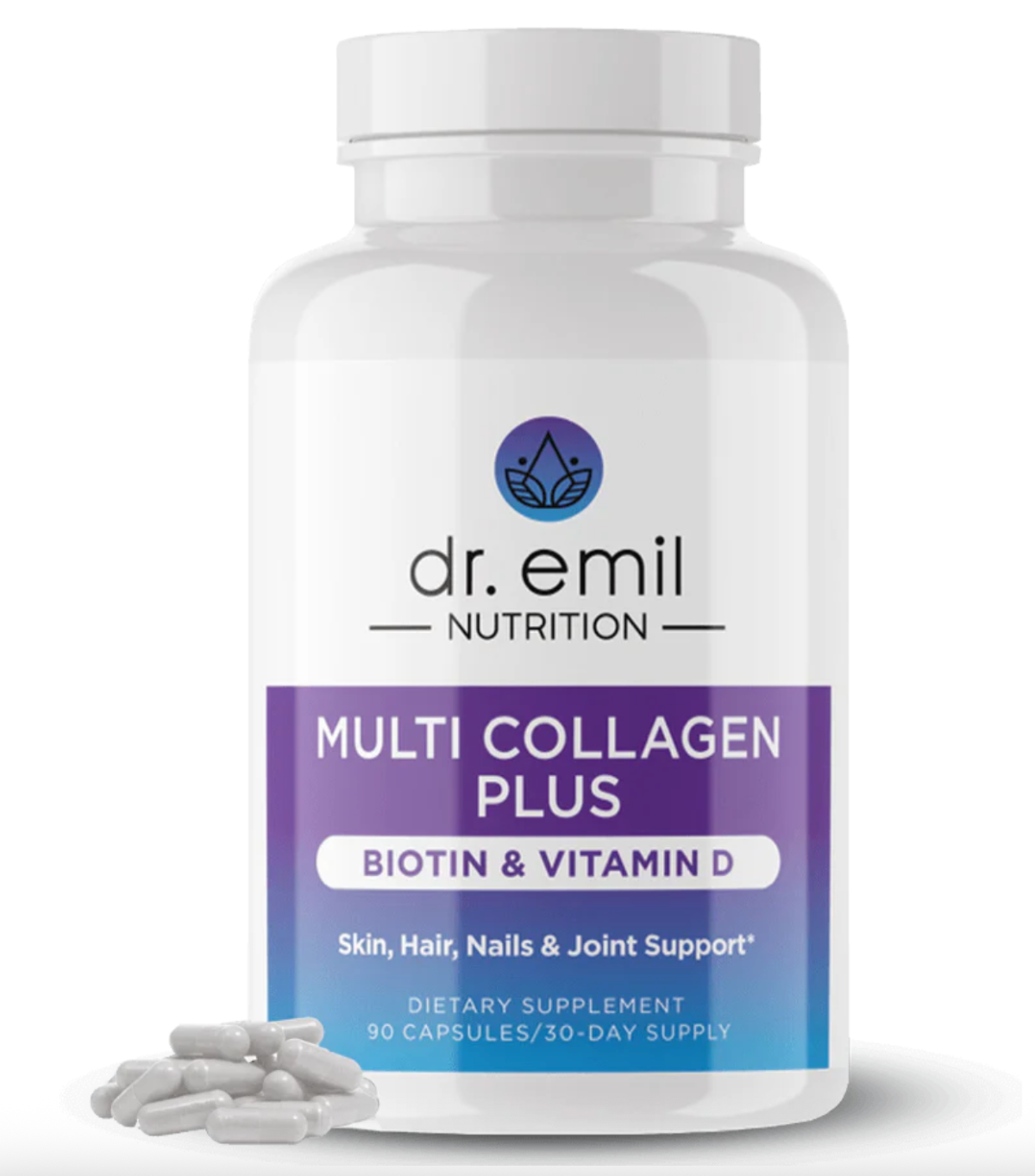
Shop Dr. Emil Nutrition Multi Collagen Plus Biotin & Vitamin D>>
Multi Collagen Plus combines hydrolyzed collagen peptides with biotin and vitamin D, delivering a comprehensive formula to support beauty, joint, and overall body health. Collagen provides the structural protein that strengthens hair, nails, and connective tissues, while biotin supports keratin production and vitamin D helps maintain strong bones and healthy metabolism — all essential for keeping hair its healthiest and strongest.
Hydrolyzed collagen peptides are easily absorbed, so your body can quickly use the nutrients to strengthen tissues.
Dr. Emil Nutrition Multi Collagen Peptides Plus Lean Fuel

Shop Dr. Emil Nutrition Multi Collagen Peptides Plus Lean Fuel >>
Multi Collagen Peptides Plus Lean Fuel is also a doctor-formulated supplement designed to support hair, skin, nails, and joints — making it a great option for anyone focused on weight management or fitness goals. Like other Dr. Emil collagen products provide hydrolyzed collagen peptides, which your body can absorb efficiently to strengthen connective tissue, support joint health, and improve hair, skin, and nail resilience.
What sets this formula apart is its Lean Fuel blend, which is crafted to support muscle maintenance and satiety. These ingredients help you feel fuller for longer, making it easier to stick to your nutrition plan while also supporting lean muscle — which is key for a healthy metabolism.
Why does that matter? Making choices that are healthy for your body as a whole are also healthy for your hair, and that includes making healthy dietary choices and getting plenty of exercise. Plus, its versatile powder format makes it easy to mix into smoothies, coffee, or shakes, providing a convenient and tasty way to get collagen and lean muscle support every day.
How to Get the Most Out of Collagen
If you’re serious about keeping your hair looking and feeling healthy, adding collagen to your routine can be a smart move—but it works best when paired with the right diet and habits. Think of collagen as scaffolding: it gives your hair the raw materials it needs, but it won’t do the work alone.
- Supplements: Collagen peptides are the most common form, usually derived from bovine or marine sources. They’re easy to mix into smoothies, coffee, or even oatmeal. A typical daily dose ranges from 5–10 grams. Consistency matters—collagen is cumulative, so daily intake over a few months is when you’ll start to notice changes in hair strength, texture, and possibly density.
- Key Nutrients: Collagen works best in tandem with other nutrients. Vitamin C is essential for collagen synthesis, so loading up on oranges, strawberries, bell peppers, and broccoli can amplify results. Biotin, zinc, and silica also play supporting roles in hair growth and keratin production, making a nutrient-rich diet crucial.
- Lifestyle Factors: Stress, sleep, and circulation all impact hair health. Exercise improves blood flow to hair follicles, while good sleep helps regulate hormones that influence hair growth. Avoiding smoking and minimizing alcohol can also protect your body’s ability to produce collagen naturally.
- Scalp Care: Collagen may help from the inside, but don’t neglect your scalp. Gentle exfoliation and hydration support follicle health and make sure your hair has a strong foundation to grow from.
By combining collagen supplements with a nutrient-rich diet and supportive lifestyle habits, you give your hair the best chance to look fuller, stronger, and healthier.
Collagen doesn’t promote hair growth or stop hair loss, but studies suggest it can work with other healthy choices to keep your hair healthier and stronger than it would be otherwise.
Collagen isn’t a miracle cure, but it can be a valuable part of a hair-health routine—especially when combined with a nutrient-rich diet and supportive lifestyle habits. From supplements to vitamin C-rich foods, stress management, and proper scalp care, taking a holistic approach gives your hair the best chance to stay strong, resilient, and vibrant. Results take time, so patience and consistency are key.
By understanding how collagen works and pairing it with the right habits, you’re not just hoping for healthier hair… you’re giving your follicles the tools they need to thrive.