



As we age, our bodies face a silent decline that affects energy, mental clarity, and overall vitality. At the heart of this decline lies NAD+, a crucial coenzyme that powers nearly every cell in your body. By age 50, your NAD+ levels may have dropped by 50% compared to your youth, contributing to fatigue, cognitive decline, and increased disease risk. The good news is that you have significant control over your NAD+ levels through lifestyle choices, dietary strategies, and targeted supplementation. We’ll learn about how to naturally boost your NAD+ levels, from simple dietary changes and exercise protocols to quality supplementation options. Whether you're looking to optimize energy, support healthy aging, or enhance mental performance, understanding how to maintain robust NAD+ levels can transform your approach to wellness.
Understanding NAD+ and Why It Declines
The Essential Role of NAD+
NAD+ (nicotinamide adenine dinucleotide) serves as a fundamental coenzyme in every living cell, acting as an electron transporter in the metabolic reactions that convert food into cellular energy. Beyond energy production, NAD+ activates sirtuins, a family of proteins often called "longevity genes" that regulate DNA repair, inflammation, stress resistance, and cellular aging. NAD+ also supports PARP enzymes responsible for detecting and repairing DNA damage that accumulates daily.
Without adequate NAD+, mitochondria struggle to produce ATP, the cellular energy currency, leading to fatigue and reduced organ function. Sirtuin activity diminishes, compromising cellular maintenance and repair. DNA damage accumulates, potentially accelerating aging and increasing disease susceptibility. Understanding NAD+'s central role highlights why maintaining optimal levels is crucial for long-term health.
Why NAD+ Levels Decline With Age
Multiple factors contribute to age-related NAD+ depletion. Increased consumption by DNA repair enzymes depletes available NAD+ as cellular damage accumulates over time. The enzyme responsible for breaking down NAD+, CD38, becomes increasingly active with age, accelerating depletion. Meanwhile, the body's ability to synthesize NAD+ from dietary precursors becomes less efficient. Chronic inflammation, oxidative stress, and metabolic dysfunction further compromise NAD+ production and accelerate consumption.

This decline isn't inevitable. Research shows that lifestyle interventions can significantly impact NAD+ metabolism, potentially slowing or even reversing age-related depletion. The strategies outlined below address both sides of the equation by boosting NAD+ production while reducing excessive consumption.
Dietary Strategies to Boost NAD+ Naturally
Foods Rich in NAD+ Precursors
While you cannot consume NAD+ directly, you can eat foods containing its building blocks. Niacin (vitamin B3) serves as a primary NAD+ precursor found in chicken breast, turkey, tuna, salmon, beef liver, peanuts, mushrooms, and green peas. Tryptophan, an amino acid your body converts to NAD+, appears abundantly in turkey, chicken, eggs, cheese, salmon, nuts, and seeds.
Some foods contain trace amounts of the more direct precursors nicotinamide riboside (NR) and nicotinamide mononucleotide (NMN). Cow's milk provides small amounts of NR, while edamame, broccoli, cabbage, cucumber, and avocado contain minimal NMN. However, these amounts are far below supplemental doses, making dietary sources alone insufficient for therapeutic NAD+ elevation.
The Power of Caloric Restriction
Caloric restriction is one of the most powerful dietary interventions for boosting NAD+ levels. Reducing calorie intake by 20-40% while maintaining adequate nutrition activates cellular stress response pathways that upregulate NAD+ biosynthesis. This metabolic shift triggers sirtuins and enhances mitochondrial efficiency, creating a positive feedback loop that supports NAD+ production.
Studies consistently show that caloric restriction extends lifespan and improves healthspan in numerous species. While severe restriction isn't practical or sustainable for most people, even moderate calorie reduction can influence NAD+ metabolism. The key is maintaining nutritional adequacy while creating enough metabolic stress to trigger beneficial adaptations.

Intermittent Fasting and Time-Restricted Eating
Intermittent fasting offers a more practical approach to gaining metabolic benefits without sustained calorie restriction. Fasting periods activate similar pathways as caloric restriction, boosting NAD+ levels and sirtuin activity. During fasting, cells shift from growth mode to maintenance and repair mode, prioritizing cellular cleanup and stress resistance.
There are a plethora of fasting models you can follow depending on your goals. Detailed schedules exist for daily or weekly fasting. Even simple time-restricted eating, finishing dinner by 7 PM and not eating until 7 AM the next day, provides a 12-hour fasting window that can support NAD+ metabolism.
Ketogenic Diet Considerations
The ketogenic diet, characterized by very low carbohydrate intake and high fat consumption, may influence NAD+ levels through multiple mechanisms. Ketosis alters cellular metabolism in ways that can enhance mitochondrial function and reduce oxidative stress. Some research suggests ketogenic diets may support NAD+ production, though evidence remains mixed and individual responses vary considerably.
If considering a ketogenic approach, focus on whole food sources of healthy fats, adequate protein, and nutrient-dense low-carb vegetables. Avoid the common pitfall of excessive protein consumption, which can impair ketosis. As with any significant dietary change, consult a healthcare provider, especially if you have existing health conditions.
Exercise: A Powerful NAD+ Booster
How Exercise Elevates NAD+
Physical activity is one of the most effective and important natural strategies for increasing NAD+ levels. Exercise creates beneficial metabolic stress that triggers adaptive responses, including upregulation of NAD+ biosynthesis pathways. During exercise, energy demands surge, depleting ATP and increasing the NAD+/NADH ratio, which signals cells to produce more NAD+.
Regular exercise also enhances mitochondrial biogenesis, the creation of new mitochondria, and improves existing mitochondrial efficiency. Since mitochondria house much of the cell's NAD+, more and better-functioning mitochondria mean greater NAD+ production capacity. Exercise additionally reduces chronic inflammation and oxidative stress, decreasing excessive NAD+ consumption.

High-Intensity Interval Training (HIIT)
HIIT workouts appear particularly effective for boosting NAD+ levels. These sessions alternate short bursts of intense effort with recovery periods, creating significant metabolic stress that triggers robust adaptive responses. Research shows HIIT enhances mitochondrial function more effectively than moderate steady-state exercise.
A typical HIIT session might involve 30 seconds of maximum effort followed by 90 seconds of recovery, repeated for 15-20 minutes. This can apply to running, cycling, rowing, or bodyweight exercises. Start conservatively if new to HIIT, as the intensity demands proper conditioning to avoid injury.
Resistance Training Benefits
Strength training offers complementary benefits for NAD+ metabolism. Building and maintaining muscle mass supports metabolic health and insulin sensitivity, both important for NAD+ production. Resistance training also stimulates mitochondrial adaptations and reduces age-related muscle loss that can impair metabolic function.
Aim for 2-3 resistance training sessions weekly, targeting major muscle groups with compound movements like squats, deadlifts, presses, and rows. You can use progressive overload which includes gradually increasing weight, repetitions, or difficulty to ensure continued adaptation and benefit.
Finding Your Exercise Sweet Spot
While exercise boosts NAD+, excessive training without adequate recovery can have the opposite effect, depleting NAD+ through overwhelming metabolic stress and inflammation. Balance intense training with sufficient rest, proper nutrition, and sleep. Most people benefit from 3-5 exercise sessions weekly, mixing intensity levels and incorporating active recovery days.
Sleep and Circadian Rhythm Optimization
The NAD+-Sleep Connection
NAD+ levels follow a circadian rhythm, fluctuating throughout the 24-hour cycle in coordination with your sleep-wake patterns. Disrupted circadian rhythms and poor sleep quality impair NAD+ metabolism, reducing production and accelerating consumption. During sleep, your body performs crucial repair and maintenance processes that depend on adequate NAD+ availability.
Sleep deprivation increases inflammation and oxidative stress, both of which consume NAD+ at accelerated rates. Chronic sleep restriction also impairs metabolic function and insulin sensitivity, indirectly affecting NAD+ levels. Prioritizing sleep quality is a foundational strategy for maintaining optimal NAD+ metabolism.

Optimizing Your Sleep Environment
Create an environment conducive to deep, restorative sleep. For optimal sleep, it’s best to keep your bedroom cool, dark, and quiet. Invest in a comfortable, supportive mattress and pillows appropriate for your sleep position. Most importantly, establish a consistent sleep schedule by going to bed and waking at the same time daily, even on weekends. This consistency reinforces your circadian rhythm, supporting natural NAD+ fluctuations. Aim for 7-9 hours of quality sleep nightly, adjusting based on your individual needs and how you feel.
Evening Habits That Support NAD+
Implement a wind-down routine beginning 60-90 minutes before bedtime. Dim lights throughout your home to signal your body that sleep approaches. Avoid screens emitting blue light, which suppresses melatonin production and disrupts circadian rhythms. If screen use is unavoidable, use blue light filtering glasses or enable night mode on devices.
Avoid caffeine after early afternoon, as it can interfere with sleep quality even if you fall asleep normally. Limit alcohol consumption, which may help you fall asleep initially but significantly impairs sleep architecture and recovery. Consider relaxation practices like gentle stretching, meditation, or reading to facilitate the transition to sleep.
Stress Management and NAD+ Preservation
How Chronic Stress Depletes NAD+
Chronic psychological stress accelerates NAD+ depletion through multiple mechanisms. Elevated cortisol promotes inflammation and oxidative stress, both consuming NAD+ at increased rates. Stress impairs sleep quality and often leads to poor dietary choices and reduced physical activity, further compromising NAD+ metabolism. The DNA damage that accumulates during chronic stress requires NAD+-dependent PARP enzymes for repair.
Managing stress effectively preserves NAD+ by reducing unnecessary consumption and supporting the body's natural production pathways. Stress management isn't just about feeling better psychologically, it has profound biochemical implications for cellular health and aging.

Meditation and Mindfulness Practices
Regular meditation and mindfulness practices demonstrably reduce cortisol levels, lower inflammation markers, and improve metabolic health. Even 10-20 minutes daily of focused meditation can provide significant benefits. There are a plethora of stress-relief strategies you can utilize, from breath-focused meditation and body scans to guided visualizations, experiment to find what resonates with you.
Mindfulness can extend beyond formal meditation sessions. Practicing present-moment awareness during daily activities, eating mindfully, and taking brief mindful breathing breaks throughout the day all contribute to reduced stress and improved physiological function.
Additional Stress-Reduction Strategies
Incorporate other evidence-based stress management techniques into your routine. Spending time in nature has been shown to reduce cortisol and promote relaxation. Social connection and meaningful relationships buffer against stress's negative effects. Creative activities, hobbies, and play provide mental breaks and activate different neural pathways. Deep breathing exercises activate the parasympathetic nervous system, countering the stress response.
Regular massage, sauna sessions, or other forms of therapeutic relaxation can reduce chronic stress. Find approaches that fit your lifestyle and preferences, as consistency matters more than the specific technique.
Dr. Emil's Solutions for NAD+ Support
NAD+ Boost
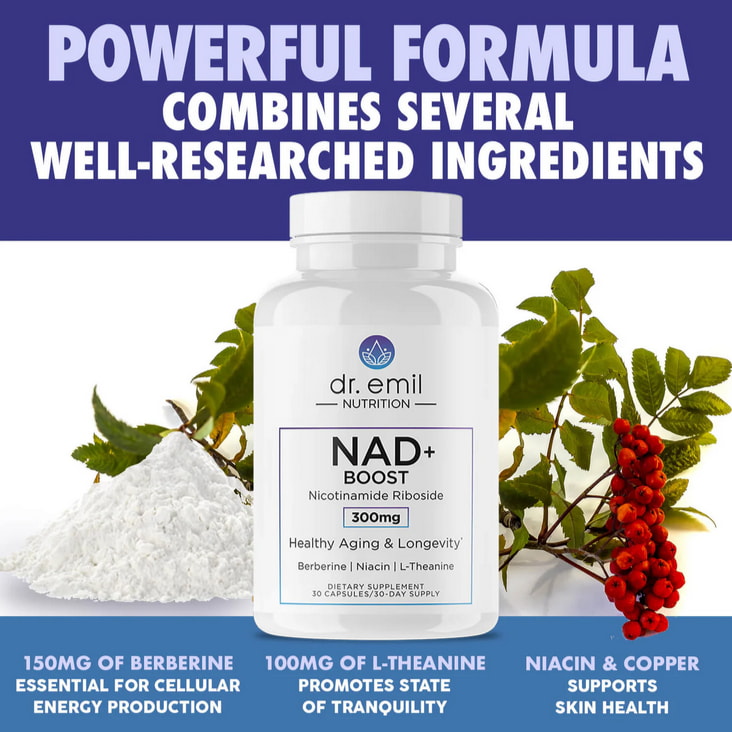
Dr. Emil's NAD+ Boost delivers comprehensive cellular support through a synergistic formula combining NAD+ precursors with complementary compounds. Each serving provides NAD+-boosting ingredients alongside berberine for metabolic support, niacin for additional NAD+ precursor availability, and L-theanine for cognitive enhancement. The formula revitalizes cellular health by elevating NAD+ levels, supporting DNA repair mechanisms, and improving cellular function for enhanced daily energy. L-theanine promotes mental clarity and focus while reducing stress-related cognitive interference, helping you maintain peak mental performance.
Berberine supports healthy blood sugar metabolism and efficient metabolic function, complementing NAD+'s metabolic benefits. The formula also supports collagen formation and provides antioxidant protection for radiant skin health. This comprehensive approach addresses cellular aging from multiple angles in one convenient supplement.
Spermidine - 5mg
Dr. Emil’s NAD+ Boost combines berberine, l-theanine, niacin, and copper to promote healthy aging. | Image courtesy of Dr. Emil.
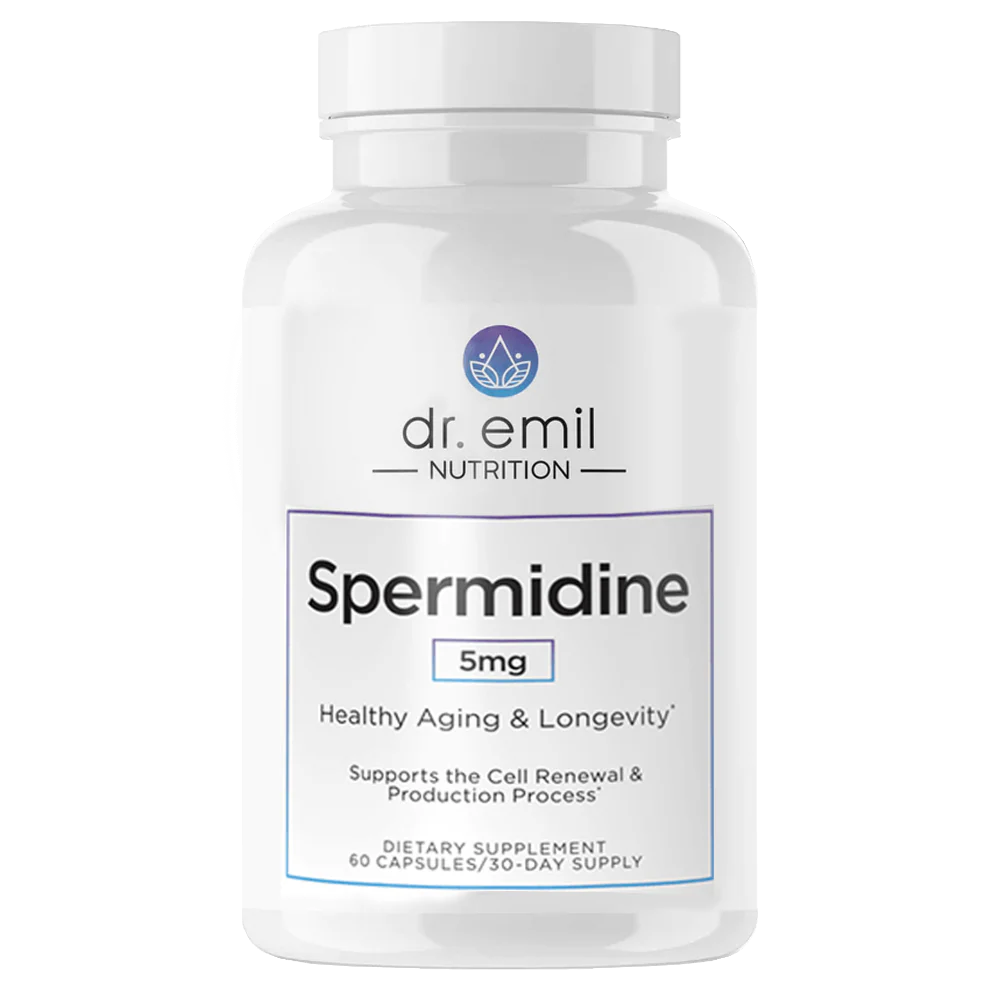
Dr. Emil's 5mg Spermidine capsules offer a unique approach to cellular health and longevity through autophagy enhancement. Spermidine, a naturally occurring polyamine compound, triggers your cells' self-cleaning process. This process, known as autophagy, removes damaged components and recycles cellular materials. This process works synergistically with NAD+ to support healthy aging and cellular vitality. Each capsule provides 5mg of highly purified spermidine that promotes cellular renewal, supports cardiovascular health, and enhances cognitive function.
Spermidine supplementation can support longevity by maintaining cellular quality control mechanisms that naturally decline with age. The compound supports mitochondrial health and metabolic efficiency while reducing cellular senescence. Spermidine also promotes hair growth and skin health through its cellular renewal properties. This innovative supplement complements NAD+ boosting strategies by addressing cellular health through complementary pathways, creating comprehensive support for healthy aging and optimal vitality.
Check out Dr. Emil’s website for more products and information about healthy aging. | Image courtesy of Instagram.
The Bottom Line on Increasing NAD+ Naturally
Maintaining optimal NAD+ levels requires combining dietary strategies, regular exercise, quality sleep, stress management, and targeted supplementation. No single intervention maximizes NAD+, but synergistic lifestyle practices create powerful results that support energy, cognition, metabolism, and longevity. Start with foundational habits that fit your circumstances, as small consistent changes compound over time. Consider adding strategic supplementation with quality NAD+ precursors as you build these habits. Investing in robust NAD+ levels may be one of the most important decisions for long-term health and vitality.
%20(1).png)


