
Zinc is an essential mineral involved in hundreds of processes throughout the body, yet zinc deficiency does not always come with an obvious warning sign. Some of the symptoms associated with inadequate zinc—such as fatigue, changes in appetite, hair concerns, or slower wound healing—can easily be attributed to stress, aging, or other everyday factors.
That is what makes Zinc Deficiency: Signs Most People Miss an important topic for anyone interested in nutritional wellness. Recognizing possible signs does not mean assuming that every symptom indicates a zinc deficiency. Instead, it provides an opportunity to take a closer look at diet, health, and individual nutritional needs.
This article will explore the signs people may overlook, including the potential connection between zinc deficiency and fatigue. It will also explain zinc's established role in immune function and cellular processes, identify factors that may increase the risk of inadequate zinc intake, and discuss practical ways to support appropriate zinc levels.
The article will also explain why zinc appears alongside spermidine in our supplement formula. Spermidine has attracted growing scientific interest for its relationship with cellular maintenance and autophagy, while zinc has a well-established role in normal physiological processes.
The conclusion is not that everyone needs more zinc. The goal is adequacy—not excess. For people who have increased nutritional needs or difficulty meeting them through diet, thoughtfully formulated supplementation can be one useful part of a broader wellness strategy.
Understanding the signs and the science can help make that decision more informed.
In this article, we’ll break down:
- Zinc Deficiency FAQ: Signs Most People Miss
- How Zinc Deficiency Can Cause Fatigue And Low Energy
- Subtle Signs Of Zinc Deficiency You Might Overlook
- Zinc And Immune Health: Why Adequate Levels Matter
- Zinc, Cellular Health, And The Role Of Spermidine
- Who Is Most At Risk For Zinc Deficiency?
- From Deficiency To Prevention: Supporting Adequate Zinc Intake

Zinc Deficiency FAQ: Signs Most People Miss
Answering Common Questions About Subtle Zinc Deficiency Symptoms And What They May Mean
Q: What is zinc deficiency?
A: Zinc deficiency occurs when the body does not have enough zinc to support its normal physiological needs. Zinc is an essential mineral involved in immune function, DNA and protein synthesis, wound healing, cell division, and numerous enzymatic reactions.
Q: What are the most common signs of zinc deficiency?
A: Signs can include impaired wound healing, changes in taste or smell, reduced appetite, hair loss, skin changes, and increased susceptibility to infections. Symptoms vary depending on how significant the deficiency is.
Q: Can zinc deficiency cause fatigue?
A: Fatigue can occur alongside zinc deficiency, although it is not specific to low zinc. Fatigue has many possible causes, so persistent tiredness should not automatically be attributed to zinc status.
Q: Can zinc deficiency affect the immune system?
A: Yes. Zinc is essential for normal immune function. Inadequate zinc can impair several aspects of immune response.
Q: Can zinc deficiency affect hair and skin?
A: It can. More significant zinc deficiency may contribute to hair loss and certain skin changes. However, these symptoms have many other potential causes.
Q: Who is most likely to develop zinc deficiency?
A: Risk can be higher among people with gastrointestinal disorders that interfere with nutrient absorption, certain dietary patterns, alcohol use disorder, or other conditions affecting zinc absorption or utilization.
Q: Can you get enough zinc from food?
A: Many people can. Meat, seafood, dairy products, eggs, beans, nuts, and whole grains can contribute zinc to the diet. Individual needs and absorption vary.
Q: Does taking zinc automatically mean you are correcting a deficiency?
A: Not necessarily. Supplementation is most useful when it addresses an actual nutritional need. Excessive zinc intake can cause nausea and interfere with copper absorption, so more is not always better.
How Zinc Deficiency Can Cause Fatigue And Low Energy
Understanding The Connection Between Zinc, Cellular Function, And Everyday Energy
When people think about zinc deficiency, fatigue may not be the first symptom that comes to mind. Yet feeling unusually tired can occur in the broader picture of inadequate zinc status. The important qualification is that fatigue is nonspecific. Poor sleep, stress, anemia, thyroid problems, inadequate calorie intake, medications, and numerous medical conditions can also cause low energy.
Why might zinc status matter? Zinc participates in hundreds of enzymatic reactions and is involved in fundamental processes including cellular metabolism, protein synthesis, DNA synthesis, and cell signaling. When the body does not have enough of an essential nutrient, normal physiological processes can be affected.
That does not mean taking extra zinc will automatically provide an energy boost. Zinc is not a stimulant, and supplementation is unlikely to turn into an immediate burst of energy in someone who already has adequate zinc intake.
Instead, zinc is better understood as part of the nutritional foundation that allows normal cellular processes to operate.
If persistent fatigue is accompanied by other potential signs of zinc deficiency, it may be worth discussing overall nutrition and possible causes with a healthcare professional. Addressing nutritional gaps can be one part of a broader approach to feeling well.
For consumers interested in healthy-aging supplements, this is also why supporting adequate zinc intake can be relevant. A spermidine-focused formula that includes zinc provides an additional source of this essential mineral alongside its primary ingredient.

Subtle Signs Of Zinc Deficiency You Might Overlook
From Changes In Taste And Appetite To Skin And Hair Concerns, Recognizing The Less Obvious Clues
Zinc deficiency does not always announce itself with an obvious symptom. Some of the signs associated with inadequate zinc can be subtle enough that people may attribute them to aging, stress, diet, or everyday life.
Changes in taste or smell are among the more distinctive possibilities. Zinc is involved in normal sensory function, and significant deficiency can affect taste and smell. Changes in appetite can also occur.
Other potential signs include:
- Slow wound healing
- Hair loss
- Skin changes
- Reduced appetite
- Frequent infections
- Changes in taste or smell
The challenge is that none of these symptoms proves someone is zinc deficient. Hair loss, for example, can have nutritional, hormonal, genetic, medication-related, and medical causes. Similarly, frequent infections can reflect many factors besides zinc intake.
This is why the keyword “Zinc Deficiency: Signs Most People Miss” should not be interpreted as a symptom checklist for self-diagnosis. Instead, these signs can serve as prompts to take a closer look at diet, overall health, and potential risk factors.
For people using supplements as part of a healthy-aging routine, understanding the signs of inadequate nutrition can also encourage a more thoughtful approach. The goal is not to consume as much zinc as possible, but to maintain adequate intake while avoiding unnecessary excess.
Zinc And Immune Health: Why Adequate Levels Matter
Exploring Zinc’s Essential Role In Normal Immune Function And Everyday Wellness
Zinc has an important relationship with the immune system, making adequate intake particularly relevant throughout adulthood. The mineral contributes to both innate and adaptive immune function, and insufficient zinc can interfere with normal immune responses.
This is one reason zinc deficiency can sometimes become more noticeable through broader changes in health rather than one obvious symptom. However, it is important not to overstate the relationship. Zinc supplements are not a guarantee against illness, and taking additional zinc when dietary intake is already adequate does not necessarily provide extra immune protection.
The nutritional goal is adequacy.
Zinc is naturally found in foods such as meat, shellfish, dairy products, eggs, legumes, nuts, and whole grains. Animal-based foods generally provide highly bioavailable zinc, while certain plant foods contain phytates that can reduce zinc absorption.
People with restricted diets or certain digestive conditions may therefore have more difficulty obtaining or absorbing sufficient zinc.
For a supplement formula, this provides a straightforward reason to include zinc alongside an ingredient such as spermidine. Spermidine is being investigated for its potential role in cellular health and healthy aging, while zinc contributes an established nutritional role in normal immune and cellular function.
The two should not be confused as interchangeable ingredients. Instead, they address different aspects of nutritional support.

Zinc, Cellular Health, And The Role Of Spermidine
Why Zinc’s Fundamental Nutritional Functions Matter When Understanding A Spermidine Formula
Understanding why zinc appears in a spermidine supplement starts with recognizing that the two ingredients have different biological roles.
Spermidine is a naturally occurring polyamine that has attracted scientific interest because of its relationship with autophagy, the cellular process responsible for breaking down and recycling cellular components. Research into spermidine and healthy aging is ongoing, with human studies continuing to investigate its potential benefits.
Zinc has a much more established nutritional role. It is required for hundreds of enzymes and contributes to DNA and protein synthesis, cell division, immune function, wound healing, and cell signaling.
That makes zinc a logical complementary nutrient in a formula centered on cellular wellness. It is not being added because zinc and spermidine are proven to work as a special anti-aging combination. Current evidence does not justify that claim.
Instead, the ingredients can be viewed as providing different pieces of the nutritional picture. Spermidine represents an emerging area of cellular-health research, while zinc supplies an essential mineral needed for normal physiological processes.
The Dr. Emil Nutrition Spermidine supplement combines spermidine with zinc and thiamin, creating a formula that goes beyond the headline ingredient while maintaining a clear nutritional rationale.
If you are looking for a great source of spermidine to incorporate into your self care routine then be sure to check out Dr Emil’s 5mg spermidine supplement!
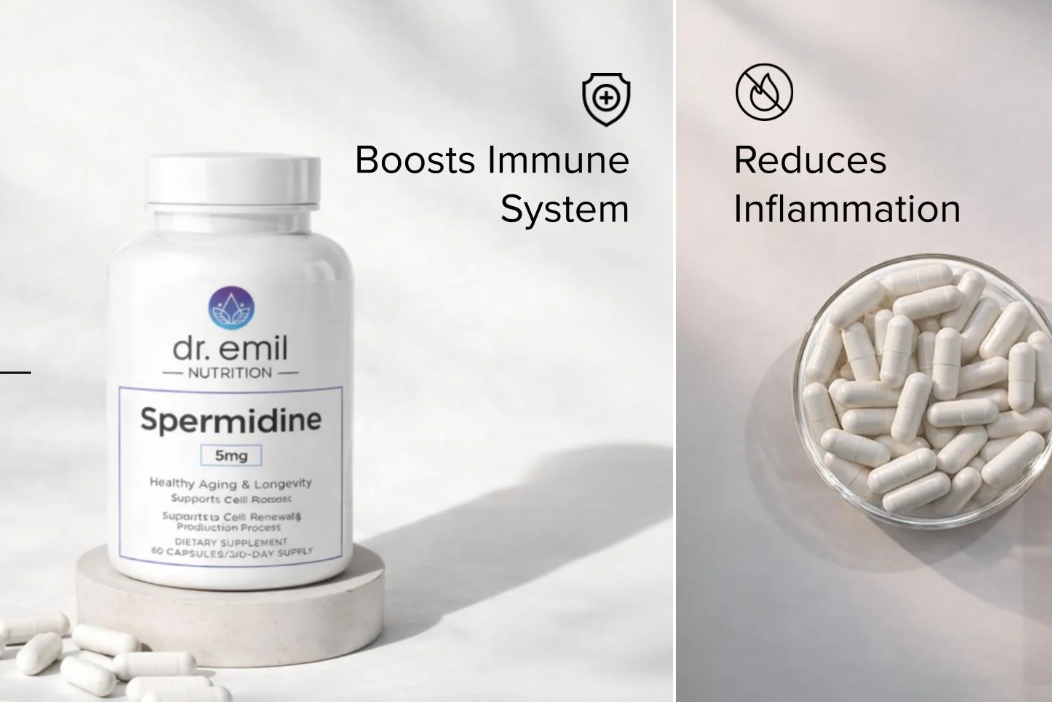
For consumers, the key takeaway is simple: the presence of zinc does not diminish spermidine's importance. It reflects an effort to provide complementary nutritional support.
Who Is Most At Risk For Zinc Deficiency?
Diet, Absorption, Age, And Other Factors That Can Influence Zinc Status
Not everyone has the same likelihood of developing zinc deficiency. In many healthy adults eating a varied diet, severe deficiency is uncommon. However, certain circumstances can increase risk.
People with gastrointestinal disorders that interfere with nutrient absorption may have difficulty maintaining adequate zinc levels. Certain dietary patterns can also influence zinc status, particularly when diets are highly restrictive or rely heavily on foods containing compounds that reduce mineral absorption.
Other factors associated with increased risk can include:
- Certain gastrointestinal diseases or digestive conditions
- Alcohol use disorder
- Diets with limited sources of bioavailable zinc
- Conditions that increase nutrient requirements or interfere with absorption
Older adults may also be vulnerable to inadequate nutrient intake for a variety of reasons, including reduced appetite or dietary changes, although age alone does not mean someone is zinc deficient.
This distinction matters because symptoms should not be used as proof of deficiency. If someone experiences persistent fatigue, appetite changes, hair loss, slow wound healing, or repeated infections, there may be many possible explanations.
A healthcare professional can help determine whether diet, medical history, medications, or laboratory testing warrant further investigation.
For those who do benefit from supplementation, a thoughtfully formulated product can help fill nutritional gaps. But supplementation should complement—not replace—a balanced diet and appropriate medical care.

From Deficiency To Prevention: Supporting Adequate Zinc Intake
Practical Ways To Maintain Healthy Zinc Levels While Understanding When Supplementation May Help
The best strategy for preventing zinc deficiency begins with adequate nutrition. Zinc is found in a wide range of foods, including oysters and other seafood, beef and poultry, dairy products, eggs, beans, nuts, and whole grains.
For many adults, a varied diet can provide sufficient zinc. The recommended dietary allowance is 11 mg per day for adult men and 8 mg per day for adult women, with different needs during pregnancy and lactation.
When dietary intake is inadequate or nutritional needs are difficult to meet, supplementation may provide a practical option. This is particularly relevant when zinc is included in a broader formula designed around complementary nutritional ingredients.
The important point is moderation. The adult tolerable upper intake level for zinc is 40 mg per day from all sources, and chronically consuming excessive amounts can interfere with copper absorption and cause other adverse effects.
That makes responsible formulation important. A supplement should provide a meaningful amount of zinc without encouraging the idea that increasingly high doses are automatically better.
In the context of Zinc Deficiency: Signs Most People Miss, the bigger lesson is awareness rather than alarm. Understanding potential signs, recognizing risk factors, eating a nutrient-rich diet, and choosing supplementation thoughtfully can all contribute to better nutritional habits.
For consumers interested in spermidine, a formula that also supplies zinc offers a convenient way to incorporate an essential mineral while exploring an emerging area of healthy-aging research.

Recognizing Zinc's Role In Healthy Aging
Supporting Adequate Nutrition Without Overlooking The Bigger Picture
Zinc deficiency can be surprisingly easy to overlook because many of its potential signs are nonspecific. Fatigue, changes in appetite, hair loss, skin concerns, slower wound healing, and frequent infections can have many explanations, but they can also provide a reason to take a closer look at nutritional status.
The important distinction is that recognizing a possible sign is not the same as diagnosing a deficiency. Persistent or unexplained symptoms deserve appropriate medical evaluation rather than simply assuming that more zinc is the answer.
For those who need additional nutritional support, zinc can have a meaningful place in a well-designed supplement routine. Its established roles in immune function, cellular metabolism, DNA and protein synthesis, and other physiological processes make adequate intake important throughout adulthood.
That is also why zinc can complement a spermidine-focused formula. Spermidine is being investigated for its relationship with cellular maintenance and healthy aging, while zinc provides an established nutritional foundation.
Ultimately, Zinc Deficiency: Signs Most People Miss is less about chasing symptoms and more about understanding the importance of nutritional adequacy.
A balanced diet should remain the foundation. When supplementation is appropriate, choosing a thoughtfully formulated product can provide convenient nutritional support without relying on exaggerated promises.
For anyone interested in healthy aging, that balanced approach—adequate nutrition, healthy lifestyle habits, and realistic expectations—is where supplementation fits best.