


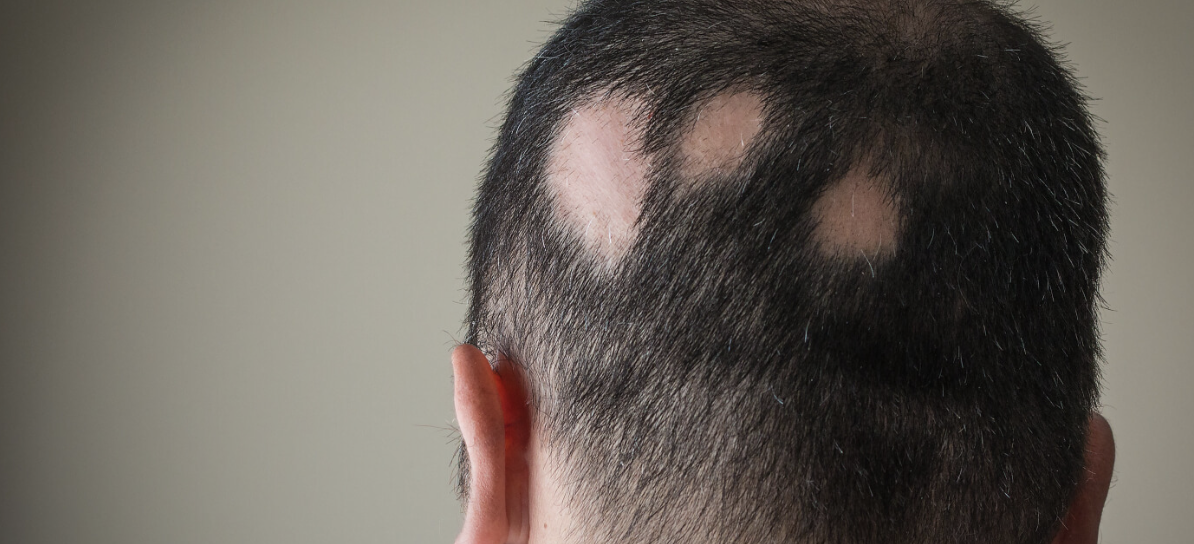
Main Image courtesy of: Dermatology & Skin Health.
Our appearances can and do mean a lot to us, how we perceive ourselves and how we want others to perceive us can take a lot of our mental faculties away from us on a day-to-day basis. So when something alters our appearance, something that’s out of our control, it can feel debilitating. We go from the occasional thought of hoping we look and feel good, to its all consuming narrative.
One huge puzzle piece that affects us in that way is hair loss.
Hair loss is something that is, unfortunately, pretty common; according to NCOA (National Council On Aging), “by age 65, about 53% of men and 37% of women will experience it.” And those statistics aren’t including the autoimmune disease and genetic condition alopecia.
When you first think of alopecia, you may picture someone with smooth bald patches on their head or someone who doesn’t have hair at all. While those two things are congruent with alopecia, there’s actually incredible nuance there, with over ten different subtypes, alopecia can look like many different things and in some cases: can be helped.
Today we’re finding out if biotin, the hair, nails, and skin supplement, helps with alopecia, what biotin is, differentiating types of alopecia like androgenetic vs telogen alopecia, and how it can potentially work for you.
- What is Biotin? How does it affect the body?
- What is Alopecia? Androgenetic vs Telogen Alopecia and Other Types
- Does Biotin Help with Alopecia?
- A Biotin Supplement to Try
Dr. Emil knows that everyone’s body is different, what works for some, may not work for others. It’s all about finding the right balance for you. So keep that in mind as you read on about biotin, its effects on alopecia, and the body as a whole.
What is Biotin? How does it affect the body?
Supplements are used to add to or supplement the diet, giving you needed nutrients, vitamins, and power-building necessities to help regulate your body and improve on its health. Many supplements can be used to potentially help with a number of ailments and some take to researching whether they could do something for a condition like alopecia.
The biggest supplement that’s been said to promote hair growth is biotin.
Biotin is advertised to strengthen and stimulate your hair, skin, and nails. It is a B vitamin, vitamin B7 to be exact, and its main function is to help the body’s enzymes break down fats, proteins, and carbohydrates.
It also has a part in creating glucose and specific fatty acids, which in turn keeps your energy levels up throughout the day so you can work, exercise, and go about your everyday life.
Biotin is most commonly found in foods like fish, bananas, sweet potatoes, eggs, and , but it also can be sourced as a supplement. In most cases you’ll get your daily amount of “needed” biotin in the foods you eat, but sometimes in such rare cases there are those affected by biotin deficiency which is most commonly found by side effects like thinning hair and a “burning” in the hands and feet.
It is also known that “patients who are biotin-deficient can display alopecia,” but it’s not necessarily congruent with every person displaying alopecia-like symptoms. Meaning that not everyone who has alopecia will inevitably see the benefits of hair growth or re-growth if they take bitcoin supplements.
What is Alopecia? Androgenetic vs. Telogen Alopecia and Other Types
The scientific term of “hair loss” is defined as alopecia, and as we’ve discussed in the intro, there are many types of alopecia:
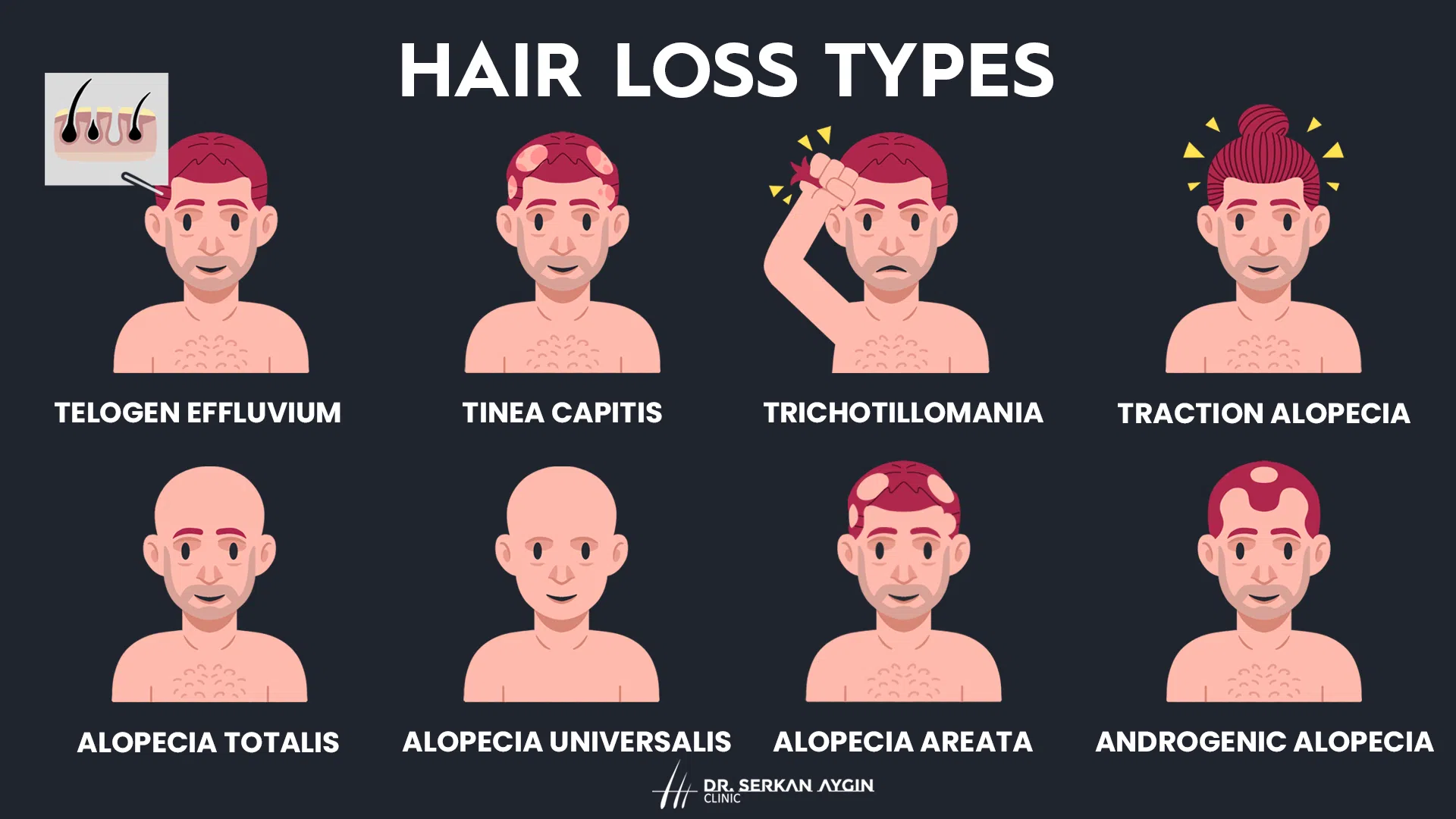
We won’t delve into every type of alopecia, as alopecia totalis, universalis, and areata are all autoimmune disorders and have not seen positive effects of biotin supplements. There are currently no known cures for these types of alopecia. Traction alopecia and trichotillomania are caused by one’s own self, whether it be through consistent pulling on their hair and/or causing tension at the roots and scalp.
What we are going to dive into is androgenetic alopecia and telogen effluvium.
- Androgenetic alopecia, or AGA, is the most common form of alopecia, it is through genetics and androgen hormones that you would lose hair. Androgen hormones are sex hormones that are a big part of reproductive health and body development. They are mainly in males, but everyone has androgen hormones. This type of hair loss is mostly seen on the crown, front, and middle of your hair.
- Telogen effluvium, or T.E., is temporary hair loss that is caused by severe stress or trauma. You will see it can affect anywhere on there’s hair on the body. It intrudes on the telogen phase of hair growth.
Hair itself, just like many aspects of our lives, comes and grows with stages:
- Anagen Phase: “85 to 90%” of the hairs currently on your head right now are in the anagen phase which is also known as the “growth” phase. This is when the hair follicle is coming out and growing to its full length unless it is cut or pulled out prematurely.
- Catagen Phase: Instead of the 85 to 95% of the anagen phase, the catagen phase involves less than 5% of your hair(s) at any given time. This is when the hair follicles shrink and hair growth slows.
- Telogen Phase: The telogen phase if a rest stop, there’s no new growth here, with less than 10% of your hairs are in this stage at any given time. Some professionals have combined this stage with our final stage: exogen.
- Exogen Phase: Also known as the “shedding phase” which happens at the top of the scalp. Losing anywhere from 50 to 100 hairs a day is considered normal and is remarked as the exogen phase.
T.E. is often seen through no inflammation or scarring, it can be sudden onset or come two to three months after a traumatic event. Usually seen as either diffuse thinning all over the scalp or handfuls of hair coming out in clumps.
AGA is where you will see the phrases “male-pattern” or “female-pattern” baldness repeat. It is a slower process that can last years, starting as early as 16 into old age. It is the most classic case of hair loss.
Does Biotin Help with Alopecia?
We know that not all types of alopecia are affected by any kind of hair loss treatments as they are autoimmune disorders and have no known exact cures. But for the two main types we discussed earlier that are caused through genetics/stress responses we have slightly different answers:
- In androgenetic alopecia: From multiple studies “in a compounded topical formulation with minoxidil, finasteride, and caffeine citrate, biotin has promoted normal hair growth in androgenetic alopecia.” So if combined with other stimulating hair-growth products, it seems as though, yes, biotin does have positive effects regarding AGA. Biotin helps with inflammation as well which is another effect of androgenetic alopecia as recent studies have correlated the two together.
- In telogen effluvium: There is no correlation between telogen effluvium and biotin deficiency which means that taking biotin supplements for this kind of condition will more than likely hold no real effect on the person.
We do have to say though, if you aren’t experiencing androgenetic alopecia, but are looking to take biotin to stimulate hair growth, it more than likely won’t do anything for you. As “B vitamins, if they are taken in excess, just get excreted in the urine,” which means taking extra biotin alongside your daily dosages through food groups will more than likely not see any true hair thickening and strengthening effects.
Word of mouth seems to be the most traction biotin supplements get in regards to its basic hair growing capabilities, some people on the internet have claimed it’s worked for them despite not having AGA.
It is important for anyone who’s considering taking any kind of supplement or vitamin, not just biotin, to talk to your doctor or a trusted healthcare professional. Even more so if you are already taking a medication that could directly influence said supplement. By consulting a professional they can take in account current or future blood tests and give you the best advice on dosages tailored to your specific needs.
A Biotin Supplement to Try
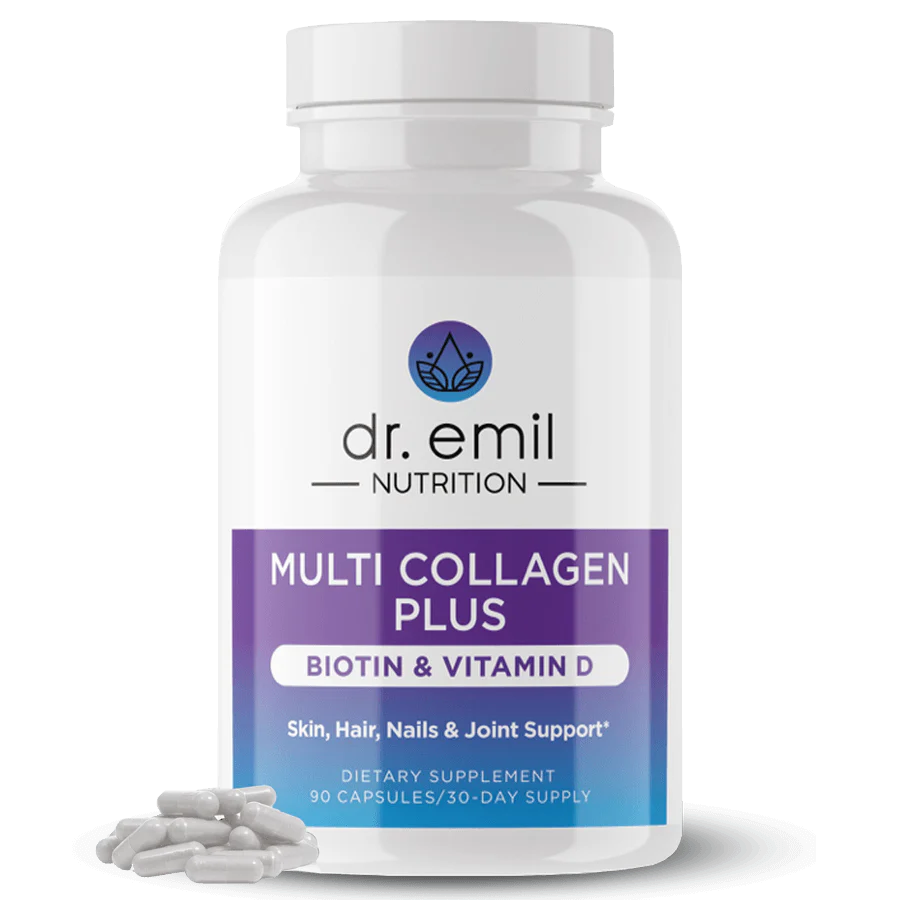
Dr. Emil Nutrition has taken regular biotin supplements and has elevated them above the set standard. With his Multi Collagen Plus Biotin & Vitamin D he combines five types of collagen peptides with biotin and vitamin D.
This dietary supplement has vitamin D which aids calcium absorption and the capsules make it so you’ll see if those who have seen positive effects from taking biotin and biotin-like supplements are conclusive to your own body. Biotin and collagen together are a super-blend for a brighter and more youthful appearance. While vitamin D and collagen are a powerful combination for our overall strength and mobility.
Those taking certain medications, are pregnant, nursing, under 18, have specific medical conditions, or are advised by a doctor to not take biotin should obviously not take the supplement. However, if none applies to you then good news because there are no reports of any adverse side effects taking up to 10 milligrams a day.
You can take too much biotin and those side effects can look like the following:
- Digestive issues like nausea, cramping, or diarrhea
- Allergic reactions like a rash
- A sudden increase in acne that’s unusual to your monthly cycles
If you are interested in trying out biotin for yourself, then you’ll need to get supplements from a vendor you know has your back.
Why Us: Dr. Emil Nutrition has been featured in acclaimed news and health publications organizations like CNN, The Guardian, and Men’s Health, and has had countless testimonials backing the quality of his products. Using his both medicine and Sports + Exercise Science degrees, his knowledge has led him to create a space that makes holistic health and happiness accessible for not just select persons, but everyone. With a range of supplements covering anything from a good night's sleep, to energy and cognitive boosts, and immune support, you’ll be able to rely on his online stores and major retailers like CVS to get you what you need.
Does Biotin Help with Alopecia?
Yes! If you have androgenetic alopecia then taking biotin alongside other topical hair-loss preventatives can help you prevent that hair loss from happening. Other forms of alopecia have not necessarily seen any effects from taking biotin at this time, more studies need to be done to properly contest this.
Adding biotin into your routine to prevent further hair loss can be a great idea albeit discussed with your doctor or similar health-care specialist. Its properties have seen positive effects in various groups of people which means adding it to your routine is a step in the right direction when looking to maintain the hair on your head.

Recommended by Dr. Emil
Multi Collagen Plus Biotin & Vitamin D
Biotin for keratin production alongside multi-collagen for hair follicle structural support and Vitamin D for immune and scalp health — a comprehensive nutritional foundation for hair health from the inside out.
Shop Now


